 Based on 1,000+ Reviews!
When the Furnace Dies, It’s Your Problem at 2 A.M.
Picture this. It’s January. It’s ten degrees outside. And your tenant is calling you, furious, because the furnace in your rental just quit.
Sound familiar? If you own rental property in the St. Louis area, this isn’t a hypothetical. It’s a Tuesday.
Here’s the thing about furnace maintenance for landlords: it’s not really about the furnace. It’s about liability, tenant trust, and whether you get a 10 p.m. phone call or a peaceful night’s sleep. A neglected furnace doesn’t just cost you a repair bill. It costs you a tenant relationship, a possible habitability complaint, and in the worst cases, a genuinely dangerous situation involving carbon monoxide.
This guide breaks down exactly what furnace maintenance should look like for landlords managing one property or twenty. We’ll cover what to check, how often, what it costs, and how to build a system so you’re never the landlord scrambling for an emergency HVAC company on a holiday weekend.

Why Furnace Maintenance Hits Different for Landlords
Homeowners can put off furnace maintenance and only hurt themselves. Landlords don’t get that luxury.
You’ve got tenants depending on that heat. You’ve got lease agreements that may spell out your legal responsibility to maintain “habitable” conditions. And you’ve got a property that’s an investment, not just a place to live. When a furnace fails, it’s not an inconvenience. It can become a legal exposure issue.
Most states, including Missouri and Illinois, hold landlords responsible for maintaining functioning heat during cold months. That’s not optional. A broken furnace in the dead of winter can trigger habitability complaints, rent withholding, or even legal action if it drags on too long.
There’s also the reputation piece nobody talks about enough. Word travels fast between tenants, especially in smaller buildings or multi-unit properties. A landlord who lets systems fail gets a reputation. A landlord who stays ahead of it? That’s the one tenants renew leases with.
The Real Cost of “I’ll Deal With It Later”
Look, everyone’s busy. Skipping an annual furnace check-up feels harmless in the moment. It rarely is.
A furnace that doesn’t get serviced tends to fail at the worst possible time, usually during the first serious cold snap, when every HVAC company in town is slammed. That means longer wait times, higher emergency rates, and an angry tenant sitting in a cold unit.
Compare that to the cost of a $150 to $250 annual tune-up. It’s not close.
What Furnace Maintenance Actually Involves
A lot of landlords assume “maintenance” just means changing a filter. It’s more than that, and skipping steps is exactly how small problems become expensive ones.
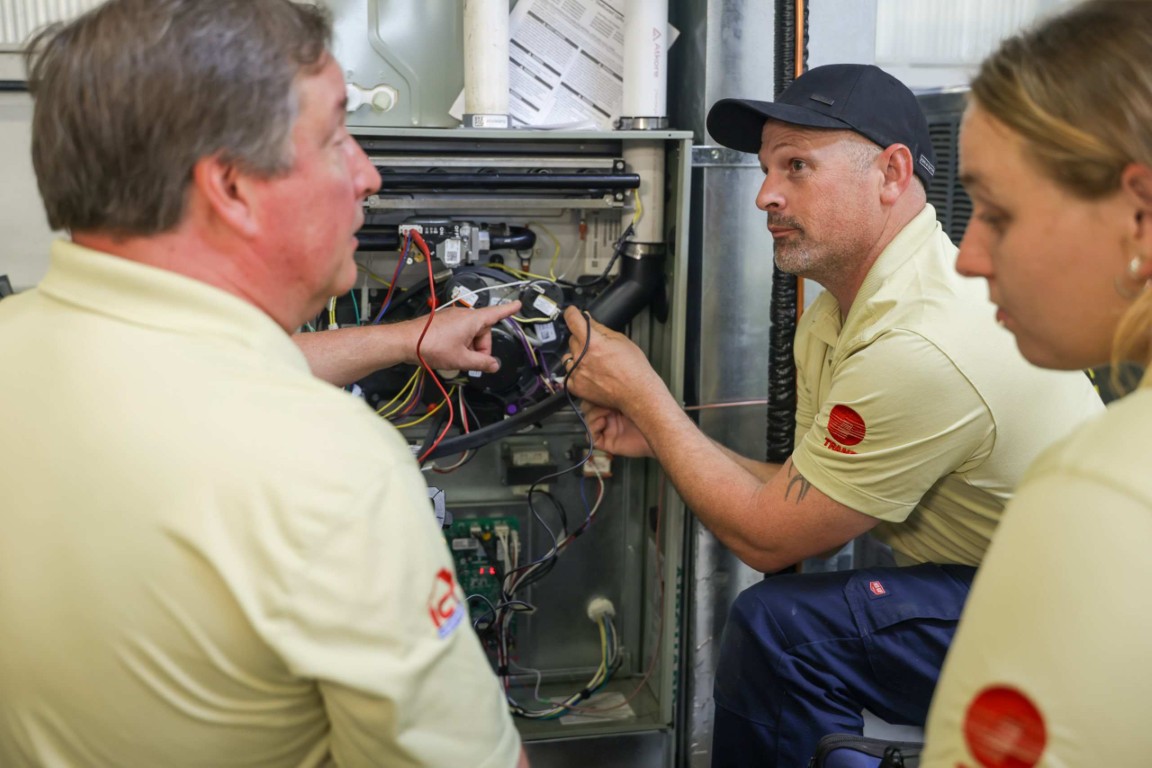
A proper furnace maintenance visit should include cleaning the burners, checking the heat exchanger for cracks, testing the ignition system, inspecting the blower motor, and checking carbon monoxide levels. A NATE-certified technician also checks electrical connections, thermostat calibration, and airflow, since restricted airflow is one of the sneakiest ways a furnace gets pushed toward early failure.
This is where a lot of budget HVAC outfits cut corners. A rushed 15-minute “tune-up” that skips the heat exchanger inspection isn’t really protecting your investment or your tenant’s safety. It’s just checking a box.
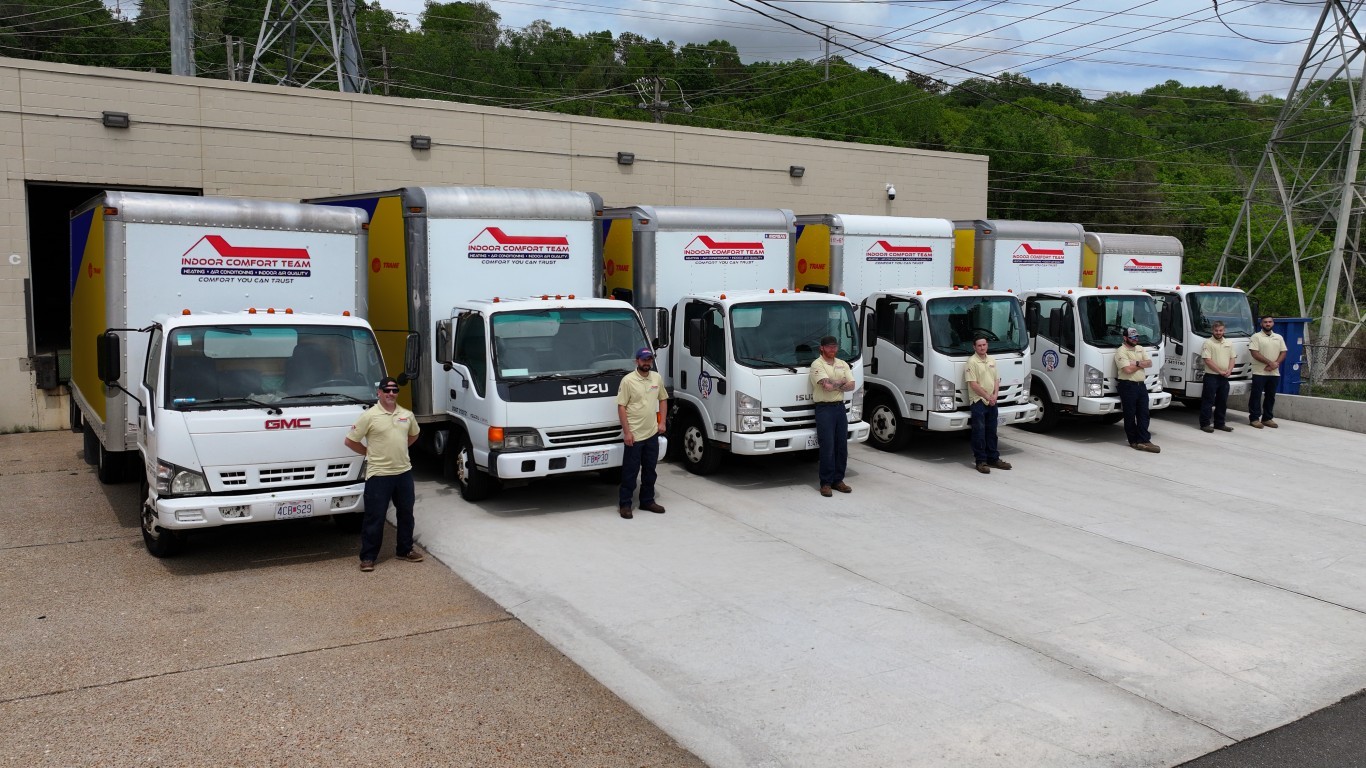
At Indoor Comfort Team, every technician who steps into your rental is background-checked and NATE-certified before they ever knock on a tenant’s door. That matters more for landlords than almost anyone else in this equation, because you’re often not the one home when the technician arrives. You need to trust that whoever shows up is going to do the job right, represent you professionally, and not create a situation where your tenant feels uneasy about a stranger in their space.
How Often Should Rental Furnaces Get Serviced?
Once a year, minimum, ideally in early fall before the heating season starts. That’s the baseline for a single-family rental with a newer system.
If you’re managing an older furnace, one that’s ten-plus years old, or a multi-unit property where the system runs harder, twice a year makes more sense. Once in fall for heating prep, once in spring for the cooling system if it shares components.
This doesn’t work if you’re managing the schedule manually across a dozen properties using sticky notes and good intentions. That’s exactly the gap a maintenance plan is built to close.
The Landlord’s Emergency Response Problem
Here’s what keeps a lot of property owners up at night: it’s not the maintenance schedule, it’s the “what if it breaks anyway” scenario.
Even a well-maintained furnace can fail. Parts wear out. Motors die. Igniters go bad without warning. When that happens at 11 p.m. on a Friday in a rental unit, you need two things fast: a company that actually answers, and a technician you trust to handle the situation professionally without you standing there.
This is where a lot of “24/7 emergency service” claims fall apart in practice. Anyone can put that on a website. Fewer companies can actually deliver a real technician, background-checked and certified, showing up within a reasonable window during a genuine emergency.
You might feel like you’re gambling every time you call an unfamiliar HVAC company for an emergency at a rental you’re not physically at. That’s a legitimate worry, and it’s the exact reason a standing relationship with one trusted provider beats shopping around every time something breaks.
Building a System Instead of Reacting Every Time
The landlords who sleep the best at night aren’t the ones with the newest furnaces. They’re the ones with a system.
That usually looks like one HVAC provider they call every time, across every property. It means a maintenance plan that runs on autopilot instead of a mental note to “call someone in the fall.” And it means clear instructions to tenants about who to contact and what counts as an actual emergency.
Indoor Comfort Team’s VIP Club was built around exactly this kind of ongoing relationship. Instead of restarting the trust-building process with a new company every time something breaks, landlords get priority scheduling, consistent technicians, and a maintenance cadence that’s handled for them. It turns furnace care from a recurring headache into something you barely have to think about.
Furnace Maintenance Plans: DIY vs. Professional vs. Ongoing Service
Not every maintenance approach fits every landlord. Here’s how the three most common paths stack up.
| Approach | What It Covers | Best For | Watch Out For |
|---|---|---|---|
| DIY Checks | Filter changes, visual inspection, thermostat checks | Owner-occupied or single small rental | Misses internal issues like cracked heat exchangers or CO leaks |
| One-Time Professional Tune-Up | Full inspection, cleaning, safety testing | Landlords with one or two units | Easy to forget year to year without a reminder system |
| Ongoing Maintenance Plan (e.g., VIP Club) | Scheduled visits, priority emergency service, consistent technician | Multi-property landlords and property managers | Requires committing to one provider, which pays off in consistency |
For a landlord with a single rental, an annual professional tune-up is often enough. But once you’re managing three, five, or ten units, an ongoing plan stops being a nice-to-have. It becomes the difference between a manageable fall routine and a chaotic scramble every October.
Frequently Asked Questions
How much does furnace maintenance cost for a rental property? A standard tune-up typically runs between $150 and $250 per unit, depending on the furnace type and system age. Landlords managing multiple properties often save through a maintenance plan that bundles visits across units at a lower per-visit cost.
Am I legally required to maintain the furnace in a rental? Yes. Missouri and Illinois both require landlords to maintain functioning heat as part of habitability standards. Regular maintenance also helps protect you if a dispute ever comes up about whether the system was properly cared for.
How do I know if my rental’s furnace needs repair instead of maintenance? Warning signs include strange smells, unusual noises, a furnace that short-cycles, or a home that heats unevenly. Any of these justify calling a technician outside your normal maintenance schedule rather than waiting for the next scheduled visit.
Can I schedule maintenance without being on-site at every property? Yes. This is one of the biggest reasons background checks and certification matter so much for landlords. A trusted provider can complete maintenance and communicate directly with tenants without you needing to be present for every visit.
Don’t Wait for the Cold Snap to Find Out
Furnace maintenance isn’t glamorous. It’s not the kind of thing that makes a great story at a landlord meetup. But it’s one of the few property management tasks where being proactive genuinely prevents disasters instead of just softening them.
The landlords who handle this well aren’t lucky. They’ve just built a system: one trusted HVAC provider, a yearly (or twice-yearly) schedule, and a plan for when something breaks anyway. That’s the whole formula.
If you’re managing rental properties across the St. Louis metro and you’re tired of being one furnace failure away from an angry tenant call, it might be time to put a real maintenance plan in place instead of hoping this winter goes fine. Reach out to Indoor Comfort Team to get your properties scheduled before the next cold snap hits.