 Based on 780+ Reviews!
You Just Bought a House — But What About the Air Conditioning?
Congratulations. You’re officially a homeowner. That’s huge.
But somewhere between signing the paperwork and unpacking boxes, a question probably crept in: What do I actually know about the air conditioning system in this house?
For most new homeowners, the honest answer is — not much. And that’s completely normal. Here’s the thing, though: your AC is one of the most expensive systems in your home, and not knowing its condition can lead to surprise breakdowns, high energy bills, or a full replacement right when you least expect it.
This guide walks you through exactly what you need to know. You’ll learn how to size up your system, what warning signs to watch for, and what steps to take so you’re not caught off guard.

Why New Homeowners Often Inherit Hidden AC Problems
Sound familiar? You walked through the home during a pleasant spring day, the AC wasn’t running, and nobody really talked about it. The inspection may have noted the system’s age — or maybe it didn’t.
Here’s what happens a lot: sellers aren’t always forthcoming, inspectors aren’t HVAC specialists, and new buyers are focused on bigger things. So the air conditioning gets a pass.
Then July hits. And suddenly you’re dealing with a unit that blows warm air, runs constantly, or — worst case — doesn’t start at all.
The frustration is real. But the good news? A few simple steps early on can save you hundreds (or thousands) down the road.
The First Thing to Do: Find Out How Old Your System Is
Age matters more than almost anything else with HVAC equipment. Most central air conditioning systems last between 10 and 15 years. Some stretch to 20 with good maintenance, but that’s not the norm.
To find your system’s age, look for the data plate on the outdoor condenser unit or the indoor air handler. The manufacturer’s serial number usually contains the year and week of manufacture — it’s different for every brand, but a quick search of the brand name plus “serial number decoder” will get you there fast.
Once you have the age, here’s a simple way to think about it:
| System Age | What It Means for You |
| Under 5 years | Likely in good shape; confirm maintenance history |
| 5–10 years | Mid-life; service it and watch for issues |
| 10–15 years | Plan for replacement within a few years |
| 15–20+ years | High risk; budget for replacement soon |
| Unknown age | Get a professional inspection immediately |
This table is your starting point — not a guarantee. But it gives you a realistic frame for what you’re working with.
What a Professional HVAC Inspection Actually Covers
A home inspection and an HVAC inspection are not the same thing. Not even close.
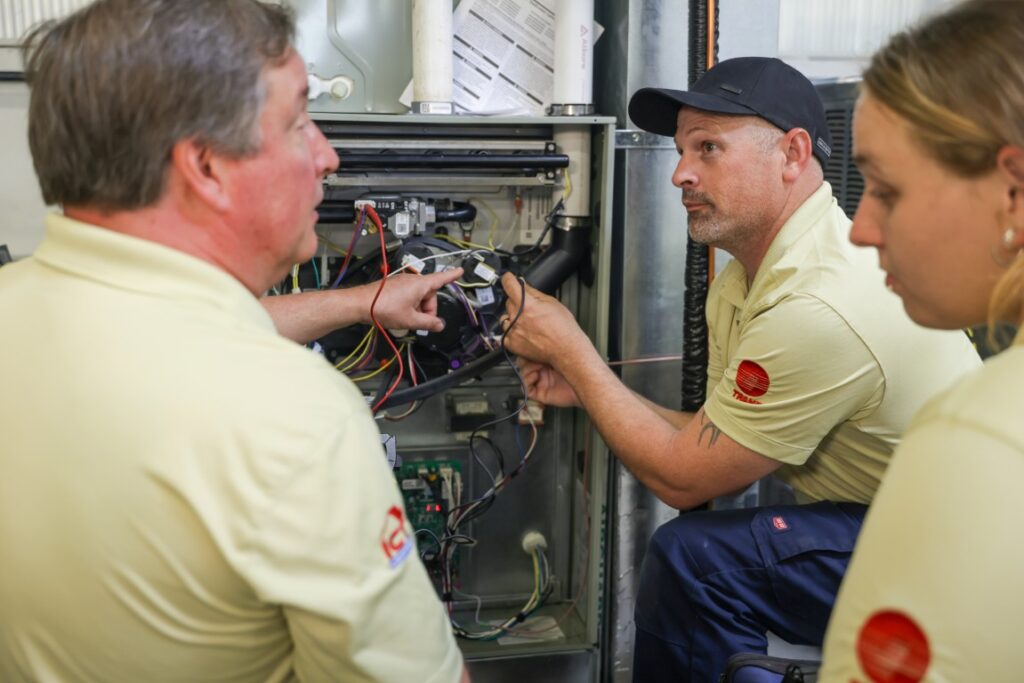
A licensed HVAC technician will check refrigerant levels, electrical connections, coil condition, airflow, thermostat calibration, and more. They’ll tell you if your system is running efficiently or quietly on its way out.
Look, this isn’t just about peace of mind — though that matters. It’s about having real information before you’re standing in a 90-degree house with a broken AC and a contractor quoting you $6,000 on a Saturday afternoon.
If you’re in the St. Louis area, the team at Indoor Comfort Team has been doing this since 1979. They’ve seen it all. And with over 4,900 verified reviews at 4.9 stars, they’ve earned the trust of a lot of homeowners in the same spot you’re in right now.

Warning Signs Your AC Might Already Be Struggling
You might not know the system’s full history, but your house will start telling you things if you know what to listen for.
Warm or weak airflow is the most obvious red flag. If you’re cranking the thermostat down and rooms still feel stuffy, something’s off.
Strange sounds — grinding, rattling, or a high-pitched squeal — usually signal mechanical problems. These don’t go away on their own.
Short cycling is when your AC kicks on, runs for just a few minutes, then shuts off repeatedly. This can mean a refrigerant issue, an oversized unit, or an airflow problem.
Humidity in the house is another clue. A functioning AC removes moisture from the air. If your home feels muggy even when the system is running, it’s not doing its full job. You can learn more about indoor humidity solutions and what causes them on the Indoor Comfort Team website.
Unusually high electric bills — especially in summer — can mean your unit is working harder than it should. Compare your bills to the previous owner’s if you can get that information through your utility company.
What to Ask the Previous Owner (Before You Close, If Possible)
If you haven’t closed yet, this section is gold. If you already have, skip ahead — but keep it in mind for your records going forward.
Ask for the maintenance history. Has the system been serviced annually? Was it ever repaired? Were those repairs documented?
Ask about the last filter change. It sounds small, but a neglected filter can cause serious problems over time — reduced airflow, frozen coils, dirty evaporator — the ripple effect is real.
Ask if there are any known issues. Sometimes sellers know something is off and are waiting to see if anyone asks directly.
Get the brand and model number. This lets you look up the unit, confirm its age, find parts availability, and understand what the system costs to run.
Why Preventive Maintenance Isn’t Optional — It’s Insurance
Here’s what most people don’t realize until after their first summer breakdown: HVAC systems don’t fail out of nowhere. They fail because small problems went unaddressed for too long.
Annual air conditioning maintenance — usually done in spring before heavy use — keeps your system running efficiently, catches developing problems early, and extends the equipment’s life.
A typical tune-up includes cleaning coils, checking refrigerant charge, testing capacitors and contactors, lubricating moving parts, and inspecting the drain line. For a fraction of a repair bill, you get a system that runs better and lasts longer.
It’s genuinely one of the smartest investments you can make as a new homeowner.
Frequently Asked Questions
How do I know if my air conditioning system needs to be replaced or just repaired?
A useful rule of thumb is the 5,000 rule: multiply the repair cost by the system’s age. If the number exceeds $5,000, replacement usually makes more financial sense. For example, a $400 repair on a 15-year-old unit hits $6,000 — replacement territory. A professional inspection will give you real numbers to work with.
What SEER rating should I look for if I need to replace my AC system?
SEER (Seasonal Energy Efficiency Ratio) measures cooling efficiency. The federal minimum in the South and Southwest is now 15 SEER2. A 16–18 SEER2 unit offers a noticeable improvement in energy savings, and 20+ SEER2 systems are available for maximum efficiency. Higher SEER generally means higher upfront cost but lower monthly bills. The right choice depends on your climate, home size, and how long you plan to stay in the house.
Can I use the old thermostat with a new AC system?
Sometimes, but not always. If you’re installing a modern variable-speed or two-stage system, it may require a compatible smart thermostat to function properly. Your HVAC technician should confirm compatibility during installation. A smart thermostat also tends to improve efficiency and control, so it’s often worth the upgrade regardless.
How often should I change my air filter as a new homeowner?
Most standard 1-inch filters should be changed every 30–60 days, especially during peak cooling season. Thicker media filters (4–5 inch) can last 6–12 months. A clogged filter is one of the leading causes of AC problems — it restricts airflow and puts strain on every component downstream. When in doubt, check it monthly.
You’ve Got This — Just Don’t Wait Until It Breaks
Being a new homeowner with an unknown HVAC system doesn’t have to be stressful. It just requires asking the right questions early.
Find out how old the system is. Get a professional inspection if you’re not sure of its condition. Watch for the warning signs. And don’t skip annual maintenance — it’s the simplest thing you can do to protect a system that can cost $5,000 to $12,000 to replace.
If you’re in the greater St. Louis area and want straight answers from people who’ve been at this since 1979, reach out to the Indoor Comfort Team. No pressure, no upsells — just honest information from a team that’s earned over 4,900 five-star reviews by treating homeowners right.
Your first summer in a new home should be comfortable. Let’s make sure it is.