
 Based on 1,000+ Reviews!
That Repair Bill Stings — But Is It the Last One?
You just handed over another check for air conditioning repairs. Again. And somewhere in the back of your mind, you’re wondering: Is this ever going to stop?
It’s a frustrating place to be. Especially when you’re on a fixed income and every unexpected expense feels like a punch to the gut.
Here’s the thing — you’re not alone. Aging AC systems are one of the biggest financial headaches homeowners face. The repairs seem to come in waves. You fix one thing, and two months later something else fails. Sound familiar?
The good news? There’s a clear way to figure out whether you’re throwing good money after bad — or whether one more repair is actually the smart move.

The “5,000 Rule” Nobody Tells You About
Here’s a simple formula that HVAC professionals actually use, and most homeowners have never heard of it.
Multiply your AC unit’s age (in years) by the cost of the repair. If that number exceeds $5,000 — replacement is almost always the smarter financial move.
For example: Your unit is 14 years old. The repair quote is $400. That’s 14 × $400 = $5,600. According to this rule, you’re in replacement territory.
It’s not perfect. But it gives you a gut-check number before you commit.
Most central air conditioning systems are designed to last 15 to 20 years with proper maintenance. Once you’re past the 12-year mark, repair costs tend to spike. Parts get harder to find. Refrigerant for older systems (like R-22) is being phased out and has become extremely expensive. The whole system is just working harder to do less.
How to Read the Signs Your AC Is Done
Repairs pile up quietly. You don’t always notice the pattern until you look back at your receipts.
Watch for these signals that your system is in its final chapter.
It’s been repaired more than twice in the last two years. One repair is bad luck. Two starts to look like a trend. Three is a pattern — and patterns in aging HVAC systems usually only move in one direction.
Your energy bills keep creeping up. An inefficient system works overtime to deliver the same cooling. That extra effort shows up on your utility bill every single month. You’re essentially paying a hidden penalty — month after month — for keeping an old unit running.
The repair involves the compressor. The compressor is the heart of your air conditioner. A compressor replacement on an older unit often costs $1,200 to $2,500 or more. At that price point, on a system that’s already aging, replacement almost always wins.
You’re losing comfort — not just money. Some rooms are cooler than others. The house won’t get below 78°F on hot days. Humidity feels wrong. These aren’t just comfort complaints — they’re signs the system is struggling to do its basic job.
What a New System Actually Saves You
People often think about the cost of replacing an AC. They don’t always think clearly about what they save.
Here’s a breakdown that might change your perspective.
| Factor | Older System (12–18 yrs) | New High-Efficiency System |
| Average SEER rating | 8–10 | 16–20+ |
| Estimated annual energy cost | $1,400–$1,800 | $700–$1,000 |
| Annual repair risk | High | Low (under warranty) |
| R-22 refrigerant cost | $100–$175/lb | N/A (uses modern R-410A) |
| Federal tax credit eligibility | No | Yes (up to 30% in many cases) |
| Expected years remaining | 1–5 | 15–20 |
A newer system with a SEER rating of 16 or higher can cut your cooling costs nearly in half. Over ten years, that’s potentially $7,000 to $9,000 back in your pocket — before you even factor in avoided repairs.
That changes the math fast.
When Repair Actually Makes Sense
Look, replacement isn’t always the answer. Let’s be honest about that.
If your unit is under 10 years old and the repair is under $500, fixing it is almost certainly the right call. A well-maintained system in its prime years still has real life left. Replacing it early is wasteful.
The exception is refrigerant leaks in older R-22 systems. Even on a younger unit, if it uses the older refrigerant and has a significant leak, the ongoing cost of that refrigerant can make replacement the smarter move sooner than you’d expect.
Also worth noting: if you’re planning to sell your home in the next year or two, a new AC system can be a meaningful selling point — and is sometimes required by buyers’ inspectors. That changes the value calculation too.
The Part That Most Homeowners Get Wrong
Here’s what actually trips people up. It’s not the math. It’s who they ask.
If you call a technician who profits more from repairs than replacements, you might get a repair recommendation even when replacement makes more financial sense. On the flip side, a company that leans heavily on new system sales might push replacement too early.
You want someone with the experience and integrity to give you the honest answer — even when it’s not the most profitable one for them.
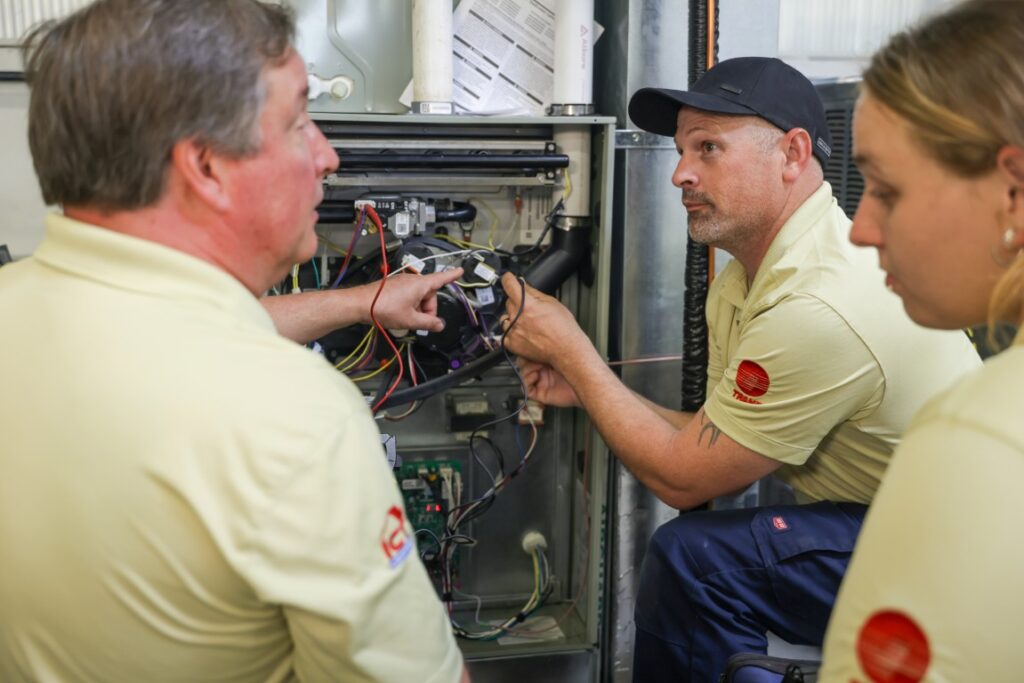
At Indoor Comfort Team, technicians are NATE-certified and background-checked. With over 45 years serving the St. Louis area and more than 4,900 verified five-star reviews, the track record speaks for itself. The goal isn’t to sell you something. It’s to give you the right answer for your situation — and back it with a 100% satisfaction guarantee.
That kind of no-pressure honesty matters a lot when you’re facing a four-figure repair decision.
Financing and Rebates Make Replacement More Reachable
One of the biggest reasons homeowners delay replacing an aging system is the upfront cost. That’s completely understandable.
But here’s what’s changed: federal tax credits now allow homeowners to claim up to 30% back on qualifying high-efficiency systems installed through 2032. That’s a significant offset.
Many installers — including Indoor Comfort Team — also offer financing options like 0% interest for qualified buyers. Spreading a $6,000 system over 72 months comes out to around $83/month. For many homeowners, that’s less than what they’re already spending on inflated energy bills and repeated repairs.
It’s worth doing the math with someone you trust before assuming replacement is out of reach.
Frequently Asked Questions
How do I know if my AC repair cost is too high?
Use the 5,000 Rule: multiply your system’s age by the repair cost. If the number tops $5,000, replacement typically makes more financial sense. Also consider whether the repair involves a major component like the compressor, which signals the system is in serious decline.
What’s the average lifespan of a central air conditioner?
Most central AC units last between 15 and 20 years with regular maintenance. Systems that didn’t get annual tune-ups often hit their limit sooner — around 12 to 14 years. Once you’re past that window, repair frequency tends to increase sharply.
Are there tax credits available for replacing an old AC system?
Yes. Under current federal law, homeowners may qualify for a tax credit of up to 30% when installing qualifying high-efficiency systems. Income limits and equipment requirements apply, so it’s worth confirming eligibility with a certified HVAC contractor or your tax advisor.
What should I ask an HVAC technician before agreeing to a major repair?
Ask three things: How old is this system? What is the estimated remaining lifespan after this repair? And — critically — would you repair or replace if this were your home? A trustworthy technician will give you a straight answer, not a sales pitch.
Don’t Let the Next Repair Catch You Off Guard
The worst time to make this decision is in the middle of a heat wave with a broken system and a pushy salesperson at your door.
Start thinking about this now — while you still have time to compare options calmly, check financing, and ask the right questions.
If your system is aging, start tracking your repair history. Add up what you’ve spent in the last three years. Compare that number to what a new, energy-efficient system could save you. The answer might surprise you.
And if you’re in the St. Louis area and want a straight answer from someone with 45 years of honest work behind them, Indoor Comfort Team is a good place to start. No pressure. No surprises. Just real answers — backed by a money-back guarantee.
You’ve worked too hard for your money to keep watching it disappear into an old AC system. Make the smart call — before the next breakdown makes it for you.