 Based on 1,000+ Reviews!
Your Furnace Quits at 6 A.M. With Two Kids and a Calendar Full of Chaos
The house is cold. Someone needs breakfast, someone can’t find a shoe, and you both have meetings by nine.
Now add this: the repair company says someone will show up “sometime between 8 and 4.”
Sound familiar? It’s a rough way to start the day. You can’t leave the house, and you can’t focus on work. You also can’t shake the worry that the bill will come with a surprise attached.
Here’s the thing. Furnace repair doesn’t have to eat your day. In this guide, you’ll learn how to size up the problem fast and which fixes are worth paying for. You’ll also learn how to book a visit that fits a packed family schedule, and how to avoid paying for a new furnace you don’t need.
First, Is It Safe? Do This Before You Call Anyone
Take a breath. Before you hunt for a repair company, run a quick safety check.
If you smell gas, leave the house right away and call your gas utility from outside. If your carbon monoxide alarm is going off, get everyone out and call 911. No heating problem is worth a risk to your kids.
Everything else is usually less scary. Check that the thermostat is set to “heat” and has fresh batteries. Make sure the furnace switch (it looks like a regular light switch) is on. Then look at your air filter. A filter caked in dust can shut a furnace down all by itself.
Still cold? Then it’s time for a pro. But those two minutes of checking sometimes save a service call, and they give the technician useful clues when you do call.
Why Furnaces Fail (And What Most Companies Don’t Tell You)
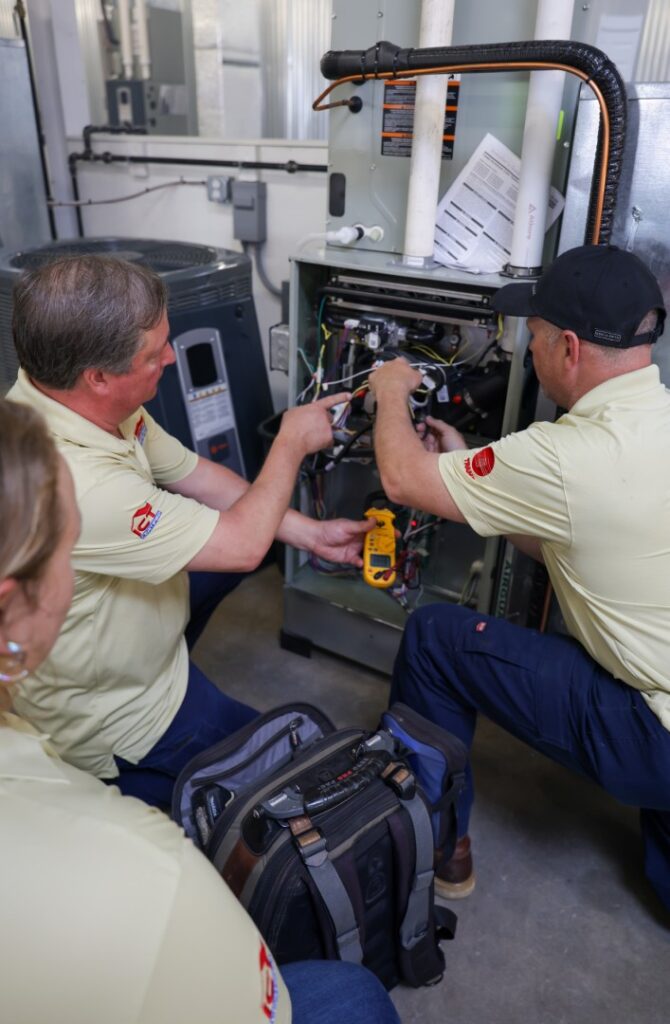
Most furnace breakdowns trace back to a handful of causes. A dirty flame sensor is one. A worn igniter is another. Then there’s a clogged filter, a failing blower motor, or a thermostat that has lost its mind.
Many of these are small, inexpensive fixes. That’s the good news.
But here’s what matters: the most common expensive problem is often something you can’t see. A furnace that’s too big for your house will blast hot air, hit the target temperature fast, and shut off. Then it starts again. That’s called short-cycling, and it wears out parts early.
So you can end up paying for the same repair twice. The part got replaced, but nobody asked why it died. A good technician looks past the broken part to the reason it broke. That’s the difference between a repair that lasts and one that comes back in January.
What Should You Expect on a Repair Visit?
Not all service calls are equal. Some are quick part-swaps, and others are real diagnoses. Here’s a rough guide to the common symptoms, what they often mean, and how serious they tend to be.
What You Notice | Likely Culprit | Typical Urgency |
Furnace won’t turn on at all | Thermostat, tripped breaker, failed igniter, or control board | High: call same day |
Blows cold air | Dirty flame sensor, gas supply issue, or overheating | High |
Turns on and off every few minutes | Clogged filter, oversized unit, or airflow problem | Medium |
Loud banging, squealing, or rattling | Blower motor, belt, or loose components | Medium to high |
Uneven heat from room to room | Ductwork, blower, or dirty filter | Low to medium |
Rising energy bills with no other signs | Aging furnace losing efficiency | Low, but worth a checkup |
These are general patterns, not a diagnosis. Every home is different, and only an in-person inspection can confirm the cause.
The Wait-at-Home Problem (And How to Beat It)
 Let’s talk about the part that drives dual-income parents up the wall: the appointment window.
Taking a half day off for a furnace? It’s frustrating. Maybe you’ve already burned your sick days on strep throat and school closures. So what can you actually do?
Book Smart, Not Just Fast
Start by scheduling online instead of sitting on hold. The Indoor Comfort Team site lets you request service online and choose a morning or afternoon slot. You can do it in two minutes after the kids are in bed.
If you’re not sure whether you need a repair or a bigger project, use the instant estimate tool. It doesn’t require an appointment, so you can get a ballpark number on your lunch break.
Set Up Your Home for Hands-Off Service
Here’s a trick many families miss. Technicians need access to the furnace, not a babysitter for the house. Clear a path to the unit and move the dog to another room. Leave a note about where the thermostat is and how to reach you by phone.
If you trust a neighbor, relative, or grandparent, ask them to be the point person. Then you can keep working while someone lets the tech in. It won’t work for everyone, of course. Some people want to be home for any repair, and that’s perfectly reasonable.
Know When It’s a True Emergency
No heat with a baby in the house on a freezing night? That’s not a “wait for a convenient slot” situation. Call and say so. Indoor Comfort Team offers after-hours emergency service, so a breakdown at 9 p.m. doesn’t have to mean a night under three blankets.
Repair or Replace? The Honest Math
You’re standing in the basement, staring at a repair quote. Your stomach drops. Should you fix it or finally buy a new furnace?
Look, nobody enjoys this question. Many people worry that the person giving the answer gets paid more if you replace. That’s a fair worry. It’s why the diagnosis matters so much.
A Simple Rule of Thumb
Many heating pros use a quick test. Multiply the furnace’s age by the repair cost. If the number tops about $5,000, replacement often makes more sense. A 20-year-old furnace with a $400 repair lands at $8,000, so it’s time to think about a new one. A 7-year-old unit with a $300 repair comes to $2,100, so just fix it.
This isn’t a law of nature. It’s a starting point.
When Replacement Really Is the Smarter Move
The exception to “repair first” comes up in a few situations. One is a cracked heat exchanger, which is a safety issue. Another is a furnace past 15 to 20 years that keeps breaking. A third is a system that’s wrong for your house in the first place.
If that sounds like you, a properly sized system matters more than the brand name on the box. A technician should measure your home, not just match the old unit. That’s what the engineering mindset behind Indoor Comfort Team is all about. The company’s owner, Adam Rahmanovich, trained as an engineer. The goal is to get the answer right before anyone sells you anything.
And if a new system is the answer, the cost doesn’t have to land all at once. Take a look at the financing options before you decide. See what a furnace replacement really involves, too, so nothing catches you off guard.
What Separates a Quick Fix From a Right Fix?
Anyone can swap a part. The real value is in who shows up and how they work.
Ask these questions before you book. Do they use their own employees or subcontractors? Are the technicians background-checked, and do they hold industry credentials? Will you get an upfront price before work begins? Is there a guarantee if the fix doesn’t hold?
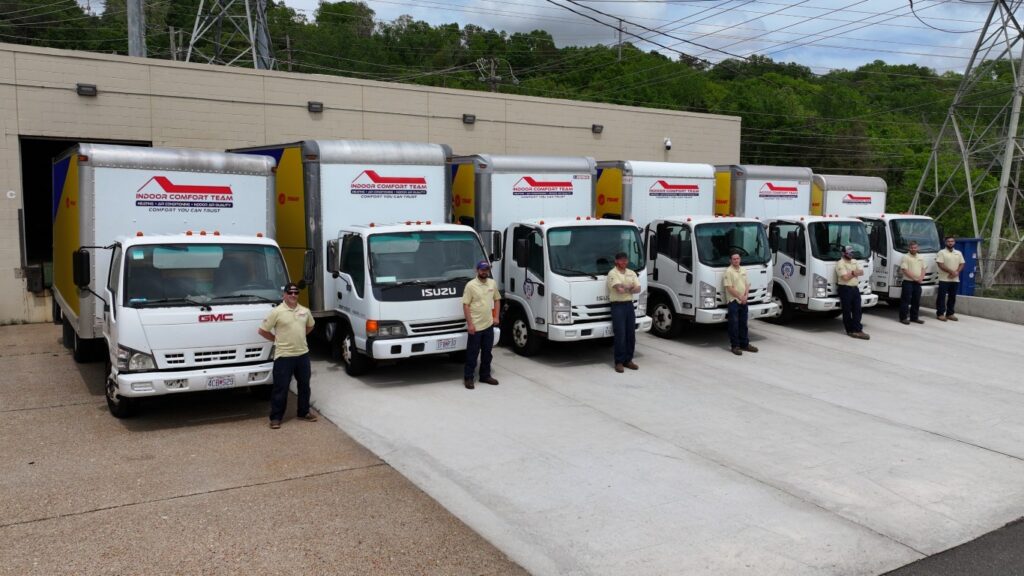
You’ll find answers to most of these on the Why Choose Indoor page. Indoor Comfort Team has served the St. Louis area since 1979, and its techs aren’t subcontractors. They also train in-house through the ICT Certification Program. When the same people work on your system year after year, they learn its quirks.
Want proof from real homeowners? Read the customer reviews and look for the details. Names, specific problems, and honest calls (“it only needed a small repair”) tell you more than a star rating.
Stop the Next Breakdown Before It Starts
Furnaces rarely fail on a calm Tuesday in April. They fail on the coldest night of the year, when every service company is slammed.
Preventing that takes about an hour a year. A yearly tune-up catches worn parts, dirty sensors, and airflow trouble early. For busy families, that’s a bargain, because a scheduled visit beats an emergency one every time.
A maintenance plan can make it even easier. The VIP Club Plan is built for exactly that: regular checkups on your calendar so you don’t have to remember. And if you’re a first-time customer, ask about the current specials and coupons.
Between visits, change your filter every one to three months. Keep vents clear of furniture and toys. Listen for new noises, too. A furnace usually complains before it quits.
Frequently Asked Questions
How long does a typical furnace repair take?
Many repairs, such as a new igniter or flame sensor, take an hour or two once the technician has diagnosed the problem. Bigger jobs like a blower motor or control board can take longer. Parts availability matters too, so ask the technician for a realistic estimate on arrival.
How much does furnace repair cost in St. Louis?
It depends on the part and the labor. Small fixes cost far less than major component replacements. A good company gives you an upfront price before any work starts, so you can say yes or no with full information. Be wary of anyone who won’t quote the job first.
Can I keep working while the technician is at my house?
Often, yes. Technicians mainly need access to the furnace and thermostat. Many working parents clear a path, leave a note, and stay reachable by phone. If you can’t be home, a trusted adult can let the tech in. You can always check the contact page to ask about the best option for your situation.
Does Indoor Comfort Team serve both sides of the river?
Yes. The team serves Missouri and Illinois homeowners across the greater St. Louis region. Check the service area page to confirm your neighborhood.
Warm House, Calmer Mornings: Your Next Step
Let’s wrap this up. A broken furnace is stressful, but it doesn’t have to wreck your week.
Check safety first. Know the common failure signs, and don’t pay for a new system until someone has explained why the old one failed. Use online scheduling to protect your time, and set up a simple plan for letting the technician in. Think about a yearly checkup so the next breakdown never lands on a freezing night.
You’ve got enough on your plate. Heating shouldn’t be one more thing you’re guessing about.
Ready for furnace repair that respects your schedule and your budget? Indoor Comfort Team is ready to solve the problem and explain it in plain English. Schedule your visit online or call (314) 230-9542 and get your home warm again.