 Based on 1,000+ Reviews!
Is Your Old Brick Chimney Quietly Wrecking Your Furnace?
It’s January, and your furnace kicks on with a rattle you’ve never heard before. You head to the basement, flashlight in hand, and wonder whether this is a $300 fix or a $12,000 problem.
Sound familiar?
If you own a historic or older home in St. Louis, furnace repair isn’t just about the furnace. It’s about the furnace and the 100-year-old brick chimney it breathes through. Most repair articles skip that second part completely.
In this guide, you’ll learn why standard-efficiency furnaces and old chimneys can be a rough pair. You’ll also see the warning signs to watch for, how to tell repair from replacement, and what a smart repair visit should include. Indoor Comfort Team, a family-owned St. Louis company, has fixed heating problems in homes like yours since 1979, so we’ll share what we see in the field.
Why Older St. Louis Homes Play by Different Rules
A 1920s brick bungalow isn’t a 2020 subdivision house. The walls are different. The ductwork is different. The chimney is definitely different.
Many older homes still have a standard-efficiency furnace, often called an 80% furnace. It burns gas, pushes the exhaust up through a metal or masonry flue, and sends it outside. That exhaust is hot. It’s supposed to rise fast and leave the house without cooling down.
But here’s the thing. An old brick chimney is usually wide, tall, and sits on an exterior wall. That’s a lot of cold surface for your exhaust to touch.
The Condensation Problem Nobody Mentions
When exhaust cools too much on the way up, the moisture in it turns to water. That water soaks into brick and mortar. Over the years, it can crumble the inside of the chimney, drop bits of debris into the flue, and leave white, chalky stains on the outside.
You might not see any of this. It’s frustrating, because the furnace can run fine while the chimney slowly falls apart behind the walls.
Why Replacement Furnaces Make It Worse
Here’s a twist that surprises a lot of homeowners. When an older furnace gets replaced, the chimney often keeps the water heater as its only partner. A lone water heater puts out far less hot exhaust than a furnace and water heater together. The chimney is now way too big for the job, and condensation gets worse.
That’s why a good furnace repair or replacement visit should always include a look at the venting. Not just the equipment.
Warning Signs Your Furnace and Chimney Need Attention
Your home talks to you. You just have to know the language.
Some signs show up in the living room. Others hide in the basement. Here’s a quick guide to what they usually mean.
What You Notice | What It Could Mean | How Urgent? |
Rust streaks or white staining near the flue pipe | Moisture or condensation in the venting | Call within days |
Furnace turns on and off every few minutes | Short cycling from airflow, thermostat, or sizing issues | Schedule soon |
Bits of brick or mortar in the chimney cleanout | Flue lining breaking down | Call right away |
Musty or sour smell when the heat runs | Moisture, burner trouble, or exhaust leaking back in | Call right away |
Soot around the furnace or draft hood | Poor combustion or blocked venting | Stop using it and call |
Carbon monoxide alarm sounds | Exhaust may be escaping into the home | Leave the house, then call 911 |
Uneven rooms: cold upstairs, hot downstairs | Duct or airflow problems common in older homes | Schedule soon |
Loud bang when the burners light | Delayed ignition or dirty burners | Schedule soon |
A quick note on that carbon monoxide row. If an alarm goes off, don’t troubleshoot. Get everyone outside and call 911. A furnace repair can wait. Your family can’t.
What a Real Furnace Repair Visit Looks Like
Not every repair call is created equal. Some techs swap a part and leave. In an older home, that can miss the real problem.
Step One: Diagnose Before Anyone Sells Anything
You might feel nervous when a stranger walks into your basement. You’ve heard the stories about the “your furnace is dead, you need a new one today” pitch. It’s a fair worry.
At Indoor Comfort Team, the approach is the opposite. Owner Adam Rahmanovich trained in mechanical engineering, and his team follows that same measure-first mindset. The goal is to get the answer right before anything gets sold. If a repair is all you need, you’ll hear that plainly. You can learn more about how that thinking started on the Meet the Owner page.
Step Two: Check the Whole Path, Not Just the Furnace
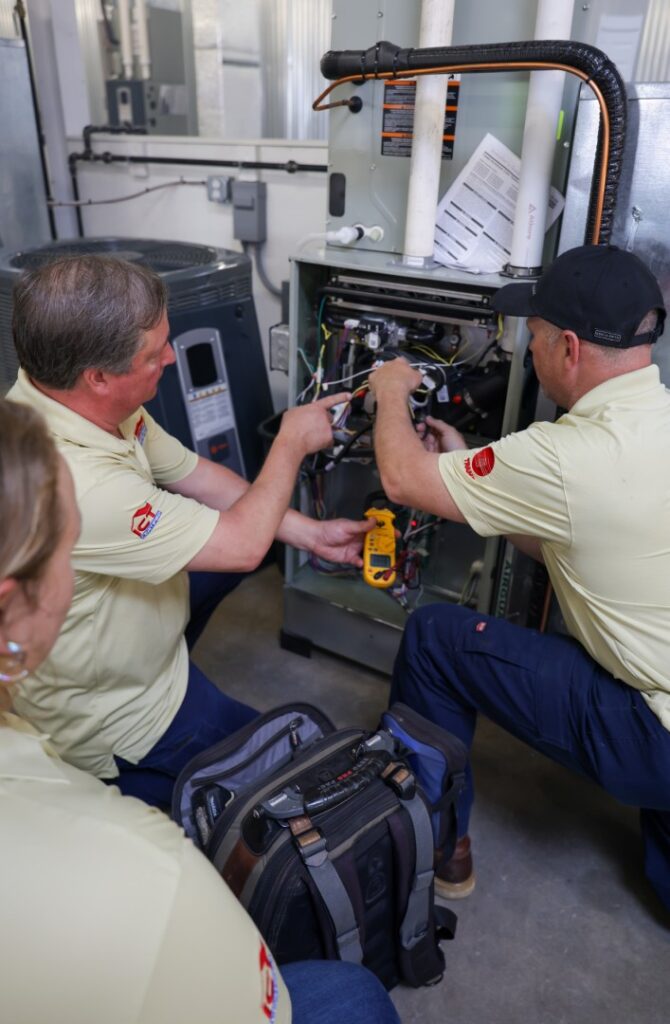
A solid visit follows the combustion gases from start to finish. That means checking the burners, the heat exchanger, the draft, and the flue pipe. It also means looking at the chimney connection and, when something seems off, recommending a chimney inspection.
Why does that matter? Because a new part on a furnace with bad venting is like putting new tires on a car with a bent axle.
Step Three: Explain It in Plain English
You shouldn’t need a dictionary. You should get a clear answer about what’s wrong, what it costs, and what happens if you wait.
Our heating repair team gives you upfront pricing, and the same techs often come back to the same homes. They remember the quirks, like the cranky basement damper or the duct that runs through the kitchen wall. That memory is hard to fake, and it saves time. Curious what sets us apart? See why homeowners choose Indoor.
Repair or Replace? Here’s How to Decide
This is the big question. And honestly, it’s the one that keeps people up at night.
Nobody wants to throw money at a dying furnace. Nobody wants to spend $10,000 when a $400 part would do, either.
When Repair Usually Makes Sense
Repair is often the smart move when the furnace is under about 15 years old, the problem is a single part, and the heat exchanger is sound. A dirty flame sensor, a worn igniter, or a weak blower motor are classic examples. These are fixable, affordable, and common.
Repair also makes sense if you plan to sell soon, or if your chimney needs work first and you’d rather not stack costs.
When Replacement Deserves a Real Look
Replacement enters the conversation when the furnace is 20 or more years old, repairs keep piling up, or a cracked heat exchanger is found. A cracked heat exchanger is a safety issue, and the exception is simple: when it’s cracked, replacing is usually the safe call.
Here’s what matters, though. In an older home, replacing the furnace can change how your venting works. A high-efficiency furnace vents through plastic pipe out a side wall, so the old chimney may only serve the water heater. That water heater might then need a properly sized chimney liner, or a switch to a different style of heater.
If you’re weighing a new system, see our guide to furnace replacement. You can also get a ballpark number with the instant estimate tool before anyone visits.
A Simple Rule of Thumb
Take the repair quote and the furnace’s age. If the repair costs more than a third of a new system, or the furnace is past its prime and the chimney is also in rough shape, pause and compare. This isn’t a hard rule. It’s a gut check. A good tech will walk through the numbers with you, not rush you.
Protecting Your Furnace Between Repairs
Prevention isn’t glamorous. But it works.
Change your filter every one to three months. Keep the area around the furnace clear of boxes, paint cans, and anything flammable. Test your carbon monoxide alarms when you change your clocks, and replace them on the schedule printed on the unit.
Then there’s the yearly checkup. A furnace tune-up catches small problems before they turn into 2 a.m. emergencies. Our VIP Club Plan keeps your system history on file, so the same team knows your furnace year after year. In an older house, that history is gold.
And if your water heater shares that old chimney, ask about it during your visit. Our water heater services cover inspection and replacement, so the whole venting picture gets handled together.
What About Cost and Timing?
Let’s be honest. Money worries make everything feel heavier in winter.
Furnace repair costs vary a lot. A simple part swap is a very different bill from a blower motor or a control board. That’s why upfront pricing matters. You deserve to know the number before the work starts, not after.
If a bigger project is on the table, there are options. Check our financing page to see payment plans that spread the cost out. And if your furnace quits at night or on a weekend, after-hours service is available, with the same pricing approach.
We serve homes across the St. Louis area and into Illinois. You can see the full list on our service area page.
Frequently Asked Questions
Can a standard-efficiency furnace safely use an old brick chimney?
Often, yes, but only if the chimney is in good shape and sized right. Cracked liners, blockages, and heavy condensation damage can let exhaust leak or vent poorly. A pro should inspect the chimney, especially in homes built before the 1950s.
Why does my furnace short cycle in my older home?
Short cycling can come from a dirty filter, a bad thermostat, an overheating limit switch, or a furnace that’s too big for the house. In older homes, leaky ducts and odd airflow make it more likely. A tech should measure airflow before replacing any parts.
Is furnace repair worth it on a 15-year-old furnace?
Usually, if the repair is modest and the heat exchanger is healthy. Furnaces can last 15 to 20 years or longer with good care. If you’re facing a major repair on an older unit, compare it against replacement costs before you decide.
What should I do if my furnace stops working in the middle of winter?
First, check the thermostat, the filter, and the power switch. If it still won’t start, call a licensed pro. Smell gas? Leave the house and call your gas company or 911. Never ignore a carbon monoxide alarm.
Warm Home, Clear Answers
 Here’s the short version. In an older St. Louis home, furnace repair means looking at the furnace and the chimney. Condensation, oversized flues, and old liners cause real problems that a quick part swap won’t solve.
Watch for the warning signs in the table above. Weigh repair against replacement with real numbers, not pressure. And when a replacement does make sense, make sure someone checks how the new system will vent. Still have questions? Our FAQ page covers more.
You don’t have to figure this out alone. Indoor Comfort Team has been solving home comfort problems across St. Louis since 1979, backed by 1,000+ five-star reviews. Our in-house trained techs don’t use subcontractors, we explain every recommendation in plain language, and we’ll tell you when a repair is all you need.
Ready for an honest answer about your furnace? Schedule your furnace repair visit today, or call (314) 230-9542. Your chimney has stood for a century. Let’s make sure it keeps doing its job.