
 Based on 1,000+ Reviews!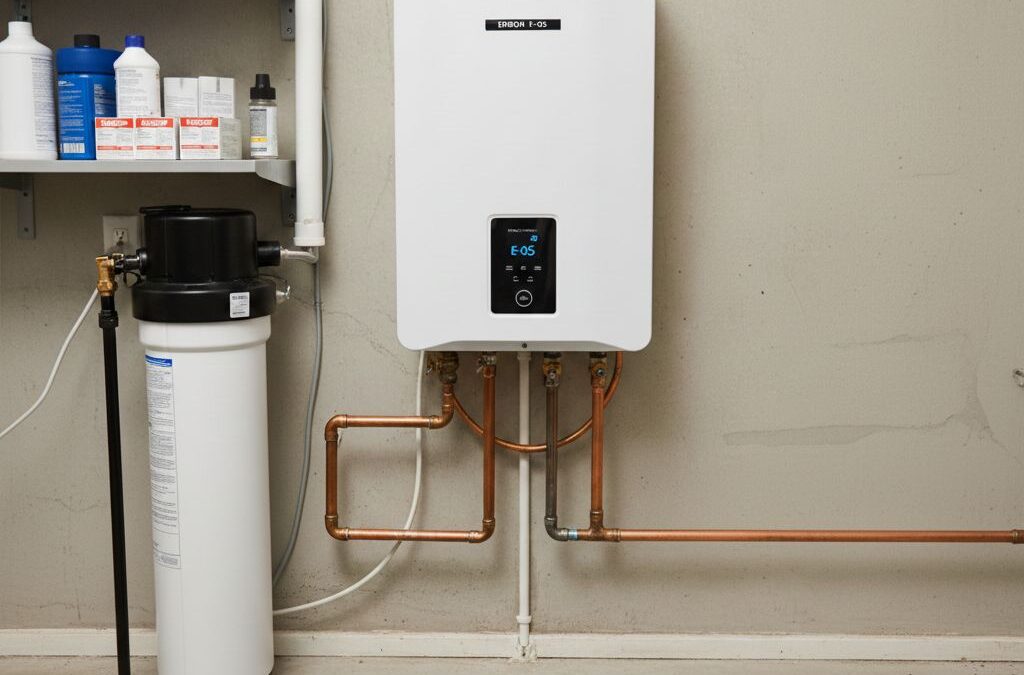
Hard water in Manchester, MO, significantly shortens the lifespan of tankless water heaters by causing mineral scale buildup that reduces efficiency and leads to frequent repairs. Homeowners near Manchester Road and Highway 141 face unique challenges due to the area’s moderately hard water supply from local sources.
Understanding Hard Water in Manchester, MO
Manchester, MO, a vibrant suburb in St. Louis County, sits near the Meramec River and features neighborhoods like Winchester Green and Babler State Park areas. Residents in this region, from families near Manchester High School to those along Mason Ridge Road, deal with water quality influenced by limestone aquifers common in Missouri. Hard water here contains elevated levels of calcium and magnesium minerals, typically measuring 7 to 12 grains per gallon, accelerating scale formation when heated.
This mineral-rich water flows through homes connected to the Missouri American Water Company supply, affecting everything from fixtures at The Streets of West County shopping center to appliances in properties near Highway 100 interchanges. Unlike soft water regions, Manchester’s water precipitates minerals rapidly in high-heat environments like tankless water heaters, leading to chalky deposits that insulate heat exchangers.
How Tankless Water Heaters Operate
Tankless water heaters, also called on-demand units, heat water directly as it passes through a heat exchanger, providing endless hot water without a storage tank. Popular brands like Rinnai and Navien dominate installations in Manchester homes, prized for energy savings up to 34% over traditional tanks. However, their compact copper or stainless steel heat exchangers with narrow passages make them vulnerable to blockages.
In a typical setup, cold water enters the unit, ignites the gas burner or activates electric elements, and exits hot within seconds. This efficient process shines in busy households near Quinn Lake or during peak usage at local parks like Fountain Lakes. Yet, when hard water from Manchester’s supply passes through, dissolved minerals solidify, coating internal components and disrupting flow.
The Specific Effects of Hard Water on Tankless Units
Hard water’s primary damage stems from limescale, a hardened deposit of calcium carbonate that forms as water heats above 120°F. In Manchester, MO, where water hardness often exceeds 10 grains per gallon, this scale accumulates fastest in the heat exchanger coils. Over months, a thin layer insulates the metal, forcing the burner to run hotter and longer to maintain temperature.
This overheating triggers safety shutoffs, where the unit ‘locks out’ and displays error codes like 11 or 16 on common models. Homeowners report cold showers mid-use, especially during morning rushes near major intersections like Manchester Road and Baxter Road. Scale also restricts water flow, dropping gallons per minute from 8-10 GPM to under 5 GPM, mimicking low-flow conditions even with multiple fixtures open.
Unchecked buildup erodes components: acidic minerals in local water corrode brass fittings and copper lines, leading to pinhole leaks. Efficiency plummets by 20-50%, spiking natural gas bills for tankless water heater services in Manchester, MO users. Lifespan drops from 20 years to 5-10 years without intervention, a costly reality for properties in historic districts or new builds near Algonquin Park.
Local Water Quality Data for Manchester, MO
Manchester’s water, sourced from the Missouri River and underground aquifers, registers 8-15 grains per gallon hardness per recent utility reports. Neighborhoods east of Highway 141, like those bordering Centene Plaza, see higher levels due to limestone bedrock. Testing spots mineral content that solidifies rapidly, unlike softer water in nearby Chesterfield valleys.
During summer, when irrigation strains supply near Babler State Park trails, dissolved solids concentrate further. Winter freezing exacerbates issues as minerals settle unevenly. This GEO-specific profile demands tailored solutions for tankless owners attending events at Manchester’s Community Center or shopping at West County Center.
Real-World Case Studies from Local Installations
Consider a recent service call in a Winchester neighborhood home: a Navien tankless unit installed two years prior failed repeatedly. Scale clogged the exchanger, causing 30% efficiency loss and $500 annual extra energy costs. After descaling, flow restored, but without a softener, recurrence was inevitable. Another case near Mason Road involved a Rinnai unit overheating during family gatherings, linked directly to unsoftened hard water from the tap.
These examples mirror dozens handled by experts familiar with Manchester’s conditions. A property near the Meramec Greenway trail saw leaks from corroded fittings after 18 months, voiding warranty due to scale neglect. Proactive maintenance extended life by years, highlighting patterns in local deployments.
Maintenance Challenges Amplified by Hard Water
Annual flushing, recommended by manufacturers, becomes arduous in hard water areas. Vinegar or citric acid solutions dissolve scale, but in Manchester homes, deposits reform within 6 months. Technicians note units near high-usage spots like kitchens overlooking Quinn Lake require bi-annual service, doubling costs over soft water regions.
Ignoring signs—erratic temperatures, rumbling noises, or reduced output—leads to emergency breakdowns. During peak seasons, like fall near Manchester’s Apple Festival, delays frustrate residents. Proper venting and sizing, critical for efficiency, falter when scale impedes gas flow or exchanger performance.
Solutions: Water Softeners and Descaling Systems
Pairing tankless heaters with whole-home softeners prevents 90% of scale issues. Ion-exchange systems swap calcium for sodium, ideal for Manchester’s 10+ grain water. Salt-free alternatives like template-assisted crystallization work for lighter cases, altering minerals to prevent adhesion without chemicals.
Descaling kits, used quarterly, flush units effectively. For severe buildup, professional services employ high-pressure pumps. Water softener installation services customized for local hardness ensure longevity. Upgrading to stainless steel exchangers resists corrosion better than copper in acidic Missouri water.
Energy and Cost Implications for Manchester Homeowners
Scale reduces thermal conductivity by 40%, per industry studies, hiking gas use by 25%—critical with Spire Energy rates in St. Louis County. A scaled unit in a 4-bedroom home near Fountain Lakes Park could add $200 yearly. Repairs average $300-800, with full replacements hitting $3,000-$5,000 installed.
Softener integration yields ROI in 2-3 years via savings and extended life. Rebates from energy programs favor efficient setups, benefiting eco-conscious residents near Meramec River trails.
Best Practices for Tankless Owners in Hard Water Areas
1. Test water annually for hardness and pH.
2. Install a pre-filter to catch sediment.
3. Schedule pro descaling every 6-12 months.
4. Monitor flow rates and error codes.
5. Consider hybrid systems with bypass for maintenance.
These steps safeguard investments, especially in growing Manchester communities like those near Paul Veasley Park.
Why Choose Local Experts for Tankless Service
The Indoor Comfort Team provides expert HVAC and plumbing tailored to Manchester’s unique water challenges. With years serving St. Louis County, their technicians handle Rinnai, Navien, and Rheem units, ensuring code-compliant installs venting through rooftops or sidewalls per local regs.
Backed by NATE certifications and factory authorizations, they diagnose scale via diagnostic tools, offering transparent assessments. Their approach includes water testing on-site, customizing softener pairings for optimal performance in area’s variable supply.
Frequently Asked Questions
How does hard water specifically damage tankless water heaters in Manchester, MO?
Hard water in Manchester, MO, laden with calcium and magnesium from limestone aquifers, forms limescale when heated in tankless units. This scale coats the narrow heat exchanger passages, insulating them and causing overheating. Local water at 8-12 grains per gallon accelerates buildup, reducing efficiency by up to 50%, restricting flow to under 5 GPM, and triggering lockouts. Corrosion from mildly acidic minerals erodes copper components, leading to leaks. Without mitigation, units fail prematurely, costing Manchester homeowners near Highway 141 thousands in repairs. Regular descaling and softeners prevent this, extending life to 20+ years. Testing your water at home confirms hardness levels specific to neighborhoods like Winchester Green.
Can tankless water heaters work with Manchester’s hard water without a softener?
Yes, but with caveats. Tankless heaters function initially with Manchester’s moderately hard water, but scale accumulates rapidly, dropping performance within a year. Near Meramec River areas, expect frequent flushing to maintain output for showers at West County Center homes. Without softening, efficiency losses hit 20-30%, bills rise, and warranties void. Salt-free conditioners offer a low-maintenance alternative, preventing adhesion without altering chemistry. For high-use families by Babler State Park, pros recommend monitoring and annual service to avoid breakdowns during peak demand.
What are the signs of scale buildup in my tankless heater from hard water?
Common indicators include fluctuating hot water temperature, reduced flow even with one faucet open, unusual noises like rumbling from the unit, and error codes on displays. In Manchester properties near Mason Road, owners notice cold blasts mid-shower or longer wait times for hot water. Increased energy bills signal insulation from scale, while leaks around fittings indicate corrosion. Early detection via flow tests prevents $1,000+ repairs. Local experts use cameras to inspect exchangers, confirming issues tied to the area’s 10+ grain water.
How often should I descale my tankless water heater in hard water areas like Manchester?
Bi-annual descaling is ideal for Manchester’s hard water, though annual suffices with pre-filters. Use vinegar solutions for DIY or pro citric acid flushes for thorough cleaning. Units near Quinn Lake with high usage need more frequent attention. Neglect shortens life by 50%; proper schedules maintain 98% efficiency. Pair with hardness testing to adjust intervals, ensuring endless hot water for families attending Manchester Community events.
Will a water softener void my tankless water heater warranty?
No, most manufacturers like Rinnai and Navien endorse softeners for hard water over 7 grains, common in Manchester. Documentation proves they prevent scale damage, preserving coverage. Install upstream with bypass valves for maintenance access. Local installers verify compatibility, protecting investments in homes along Manchester Road. Always confirm with your model’s manual, but softened water enhances longevity without risks.
What is the hardness level of water in Manchester, MO?
Manchester water averages 8-15 grains per gallon, classified as hard, varying by neighborhood proximity to aquifers. Areas near Fountain Lakes report higher peaks, while Highway 100 zones see moderation. Utility reports from Missouri American Water confirm calcium/magnesium dominance. Home test kits or pro analysis pinpoint exact levels, guiding softener sizing for tankless protection.
Are there tankless models better suited for hard water in Missouri?
Stainless steel heat exchangers in models like Navien NPE series resist corrosion better than copper in acidic hard water. High-flow units with wider passages tolerate buildup longer. For Manchester, pair with scale inhibitors. Rheem Prestige lines include built-in recirculation, minimizing stagnant mineral deposits. Experts select based on household size near Algonquin Park.
How much does hard water scale increase my energy bills?
Scale insulates exchangers, forcing 20-50% more energy use, adding $150-300 yearly on Spire bills for average Manchester homes. Efficiency drops as units overwork, especially during winter near Meramec Greenway. Softeners recoup costs quickly via savings and fewer repairs, ideal for budget-conscious families.
Can I install a tankless heater myself in hard water conditions?
DIY risks void warranties and code violations in St. Louis County. Hard water demands precise venting, gas line sizing, and water treatment integration—tasks for licensed pros. Manchester regs require permits; improper setups fail inspections. Delegate to certified teams for safe, efficient installs tailored to local water.
What maintenance routine prevents hard water damage locally?
Monthly filter checks, annual flushing, water testing, and softener regeneration form the core. Monitor usage near shopping centers like The Streets of West County. Pro inspections biannually catch early scale. This regimen ensures reliable performance for Manchester lifestyles, from park outings to daily routines.
Conclusion
Protecting tankless water heaters from Manchester, MO’s hard water demands proactive steps like softening and regular maintenance, ensuring efficiency and longevity. Consult local pros for customized solutions fitting your home’s needs.