 Based on 1,000+ Reviews!
Your House Is 100 Years Old. Is Your Furnace Venting Like It?
You love your home. The brick. The plaster walls. The staircase that creaks in the same spot every night.
But every October, a small worry creeps in when the heat kicks on. Is that chimney still pulling right? Why does the basement smell a little funny? And what’s really hiding inside those old ducts?
Sound familiar? Owners of older homes in South City, Kirkwood, Webster Groves, and Lafayette Square ask us this every fall.
Here’s the thing. Furnace maintenance in a historic home isn’t the same job as in a 2010 build. Your furnace may be new-ish, but it’s breathing through a chimney, ducts, and a basement that were built for a different era. That’s where the real risks live.
In this guide, you’ll learn what a proper tune-up should cover in an older house, the warning signs worth acting on now, and how to tell a real safety check from a quick filter swap.
Why Older Homes Change the Furnace Maintenance Game
A furnace doesn’t work alone. It pulls in air, burns fuel, and pushes exhaust out a vent or chimney. One weak link makes the whole chain less safe.
In a newer house, that chain is short and built to match. In a historic home, it’s often a patchwork. Think coal-era chimneys, ductwork added in the 1950s, a basement return cut between floor joists, and new windows that sealed up drafts your old house used to rely on.
None of that makes your home unsafe by default. It just means your furnace maintenance has to look past the furnace cabinet.
The Chimney Problem Nobody Mentions
Many St. Louis homes still vent a standard-efficiency furnace and water heater into a brick chimney. Some of those chimneys have no liner at all. Others have clay tile liners that cracked decades ago.
Furnace exhaust is warm and wet. Over time, that moisture eats at mortar and brick from the inside. You might see it as white crust on the chimney, crumbling mortar near the cleanout, or rust-colored water stains.
Worse, a damaged chimney may not “draft” well. That means exhaust can drift back into your basement instead of going up and out. And carbon monoxide doesn’t announce itself.
The “Orphaned” Water Heater Trap
This one catches a lot of homeowners off guard.
Say you upgraded to a high-efficiency furnace. Great choice. Those units vent out the side of the house through PVC pipe. But your gas water heater is still venting into the old chimney, which is now far too big for one small appliance.
A small, cool exhaust stream in a big, cold chimney often won’t rise well. Condensation builds up. Draft weakens. In some cases, gases spill back at the water heater’s draft hood.
The fix is usually a properly sized liner. But you’ll only know you need one if someone actually tests the draft.
What Real Furnace Maintenance Looks Like in an Older Home
Look, a lot of “tune-ups” are a filter change, a quick look, and a sales pitch. That’s frustrating when you’re paying for peace of mind.
A thorough visit for an older house should cover the furnace itself plus everything it depends on. Here’s how a basic check compares with what a historic home really needs.
What Gets Checked | Basic Tune-Up | Older-Home Furnace Maintenance | Why It Matters in a Historic House |
Filter, burners, flame sensor | Yes | Yes | Keeps the furnace lighting and running cleanly |
Heat exchanger inspection | Sometimes | Yes, with a camera or close visual | Cracks can let exhaust mix with your house air |
Combustion analysis (CO in the flue) | Rarely | Yes | Shows whether fuel is burning safely and efficiently |
Chimney draft test | Rarely | Yes, at furnace and water heater | Old or oversized chimneys often draft poorly |
Spillage test with exhaust fans running | No | Yes | Tighter homes can pull exhaust back inside |
Vent pipe and chimney connection | Quick look | Full inspection for rust, slope, gaps | Old connectors corrode and separate |
Return air near the furnace | No | Yes | Basement returns can pull in combustion gases |
Ductwork condition | No | Visual check, flag suspect materials | Old ducts leak, and some may have asbestos wrap |
Carbon monoxide readings in the home | Rarely | Yes | Your last line of defense |
That right-hand column is the difference between a quick visit and a real answer.

The Test Most Companies Skip
Want to know the secret? It’s called a worst-case depressurization test. The name sounds fancy, but the idea is simple.
Your tech closes the doors, turns on your bath fans and kitchen hood, runs the dryer, and then fires up the furnace and water heater. Then they watch whether exhaust goes up the chimney or spills back into your basement.
Why bother? Because that’s a real January night. Showers, dinner, laundry, and your old chimney has to fight all of it. BPI building-science training covers this test. Many HVAC techs have never run one.
Ductwork: The Hidden Half of Your Heating System
Old ductwork causes two kinds of trouble: comfort and safety.
On the comfort side, leaky ducts mean some rooms bake while others stay chilly. Undersized returns, common in older homes, leave your furnace gasping for air.
On the safety side, watch where your return air comes from. In many St. Louis homes, the return is just a panned-over gap between basement floor joists. If that return pulls air from right next to the furnace or water heater, it can draw exhaust into the duct system and spread it through the house.
A Word About Old Duct Wrap
Some homes built before the 1980s have white or gray tape or paper on duct seams and old heating pipes. Some of that material may contain asbestos.
You might feel nervous reading that. Take a breath. Intact material that isn’t disturbed is generally less of a concern. The rule is simple: don’t scrape, sand, or tear it, and don’t let anyone else do it carelessly. A good technician will flag suspect material and work around it, not rip into it.
Warning Signs You Shouldn’t Wait On
Some issues can wait until your yearly visit. These can’t.
If your carbon monoxide alarm goes off, get everyone outside and call for help. Don’t reset it and hope.
Other signs deserve a prompt call: headaches that ease when you leave the house, soot near the furnace or water heater, a lazy yellow flame instead of crisp blue, a stale basement smell when the heat runs, or rust at the base of your chimney.
The exception? A faint dusty smell the first time you turn the heat on each fall is usually just dust burning off. It should fade within an hour or so. If it lingers, call.
How Often Should an Older Home Get Furnace Maintenance?
Once a year, every year. Early fall is ideal, before the first real cold snap and before every company in town is booked solid.
But here’s what matters more than the calendar. Schedule an extra check any time you change something that affects airflow or venting. That includes new windows, a new water heater, a kitchen remodel with a powerful range hood, or closing off a fireplace. Each of those can change how your chimney drafts.
Homes with an aging liner, no liner, or a new furnace on old venting deserve a closer look.
Repair, Replace, or Leave It Alone?
This is the part where many homeowners feel stuck. You call for a tune-up, and suddenly someone’s quoting a $15,000 system. Is that real? Or is it a sales target?
It’s a fair worry. In most of this industry, the person diagnosing the problem is also paid to sell the fix.
At Indoor Comfort Team, the goal is to get the answer right before selling you anything. Sometimes that answer is “your furnace is fine, but your chimney needs a liner.” Sometimes it’s “a $300 part buys you a few more good winters.” And sometimes, yes, the heat exchanger is cracked and it’s time for a furnace replacement.
If you do replace, sizing matters even more in an older home. Many historic houses got oversized furnaces decades ago “just to be safe.” An oversized unit short-cycles, wears out faster, and leaves cold spots. A proper load calculation looks at your actual walls, windows, and insulation, not the size of the old unit.
When a High-Efficiency Upgrade Makes Sense
High-efficiency furnaces vent through PVC, not the chimney. In an older home, that can solve chimney problems for the furnace in one move. But remember the orphaned water heater. A good plan addresses both appliances together, not one at a time.
Why Experience Matters With Historic Homes
Older homes punish guesswork.
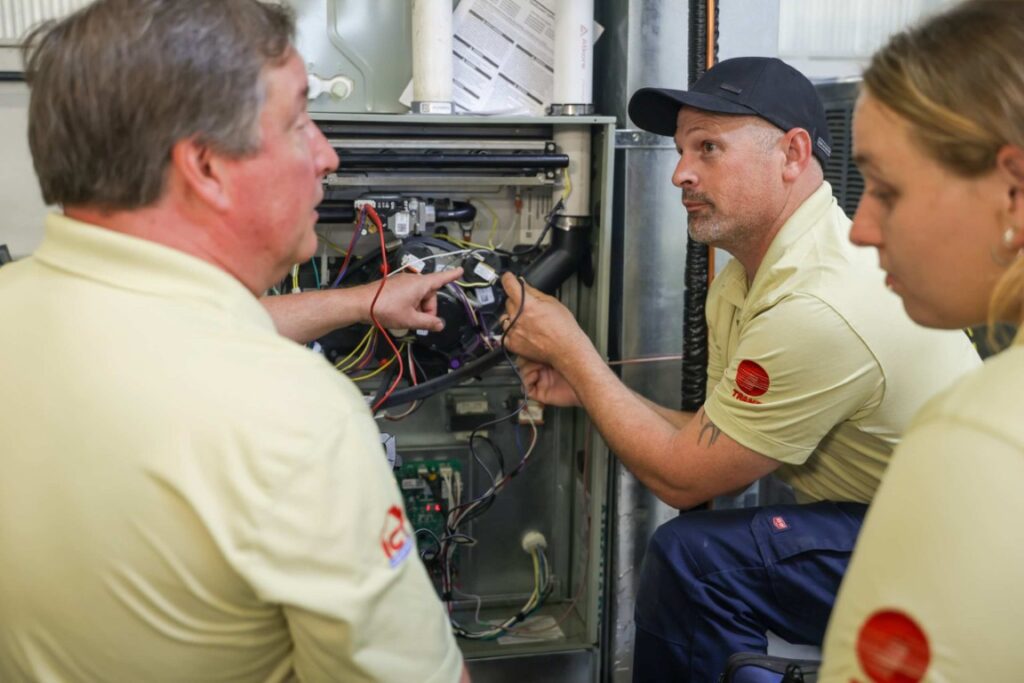
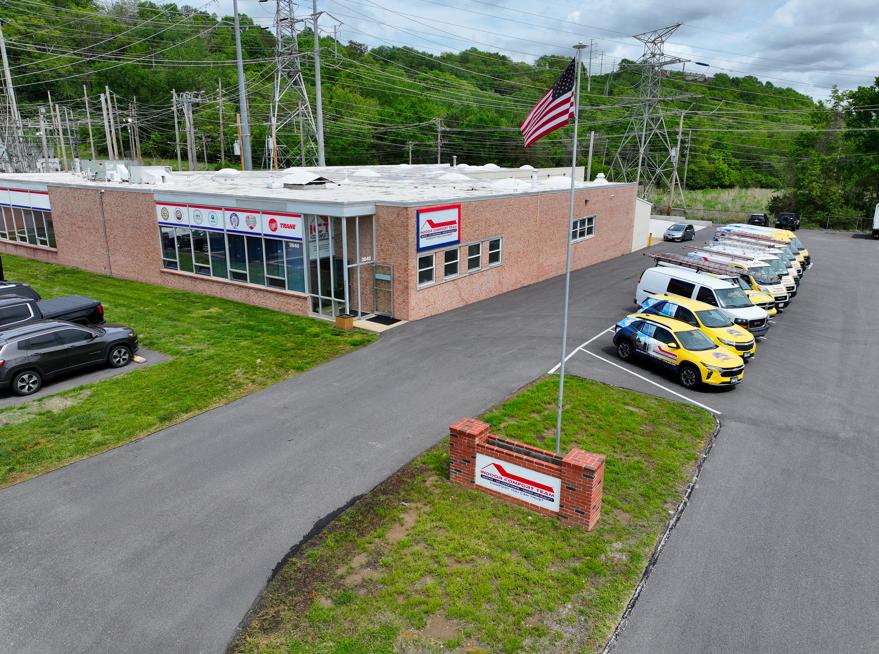
Indoor Comfort Team has served St. Louis homeowners since 1979 from our Kirkwood home base. Owner Adam Rahmanovich trained in mechanical engineering and holds BPI building-science credentials, so the team looks at your house as a whole system: furnace, chimney, ducts, and the air your family breathes. Our NATE-certified technicians are full-time employees, not subcontractors, and many have been with us for decades. You can meet the owner or meet the team before anyone ever steps into your basement.
That continuity is a big deal for older homes. When the same people see your system year after year, they spot changes early. Our VIP Club Plan keeps your system history on file so nothing gets lost between visits.
Frequently Asked Questions
Does furnace maintenance include a carbon monoxide check?
It should, but not every company does it. Ask whether the visit includes combustion analysis in the flue and CO readings in the living space. In an older home, also ask for a draft test at both the furnace and the water heater. If the answer is “we check the filter,” keep looking.
My furnace is only five years old. Do I still need yearly maintenance?
Yes, especially in a historic house. The furnace may be new, but its chimney, vent connector, and ductwork probably aren’t. Most venting and draft problems in older homes happen outside the furnace cabinet, so a newer unit doesn’t make you immune.
Do I need a chimney liner if my chimney looks fine from outside?
Not always, but you can’t judge it from the street. Damage usually starts inside the flue. A draft test and a look at the cleanout, plus a chimney camera inspection when warranted, tell you far more than the outside bricks ever will.
What does a furnace tune-up cost in St. Louis?
Prices vary by company and by what’s included. Indoor Comfort Team currently offers a Furnace Clean & Check special, and VIP Club members get scheduled maintenance built in. Whatever you pay, compare what’s tested, not just the price.
Keep the Charm, Lose the Worry
Older homes are worth the extra care. You just need furnace maintenance that respects how they were built.
Let’s recap. Your chimney and venting matter as much as the furnace. An orphaned water heater can quietly hurt draft after an upgrade. Old ducts and basement returns affect comfort and safety. And a real tune-up tests combustion, draft, and CO.
Picture this winter instead: the heat comes on, the house warms evenly, and you don’t give the chimney a second thought. That relief is the whole point.
Ready for an honest look at your home’s heating system? Schedule your furnace maintenance visit or call Indoor Comfort Team at (314) 230-9542. And if you’ve got an old-house heating story of your own, leave a comment. We’ve probably seen something like it.