 Based on 1,000+ Reviews!
The 2 a.m. Problem Nobody Wants
It’s January. The wind is howling, and it’s 4 degrees outside. You wake up because the house feels wrong. It’s too quiet, and the air is getting colder.
The furnace quit.
If your furnace is 10 years old or older, you’ve probably pictured this night more than once. Maybe you’ve even caught yourself listening for the click and whoosh of the burners, just to make sure it still starts. Sound familiar?
Here’s the thing: older furnaces almost never die at random. They wear out in a set order, and most of those weak spots can be found weeks before they fail. This guide shows you what good furnace maintenance checks on an older system, why the coldest night is the one that breaks it, and how to tell whether a repair or a new furnace is the smarter move.
Why Furnaces Fail on the Coldest Night (It’s Not Bad Luck)
It feels personal when the heat dies during a cold snap. Like the furnace waited for the worst moment.
But there’s a simple reason. On a mild 40-degree day, your furnace might run a few short cycles an hour. When it drops into the single digits, it can run almost nonstop. Every part works harder and gets hotter, and it starts and stops more times in a single day.
So a part that was already worn now gets pushed past its limit. A cracked igniter that worked fine in October finally snaps. A blower motor that ran a little warm now overheats and shuts down. The cold snap didn’t create the problem. It exposed one that was already there.
That’s why furnace maintenance in the fall matters so much for older systems. The goal isn’t just a cleaner furnace. It’s to find the weakest part before the weather does.
What Wears Out First in a 10+ Year-Old Furnace
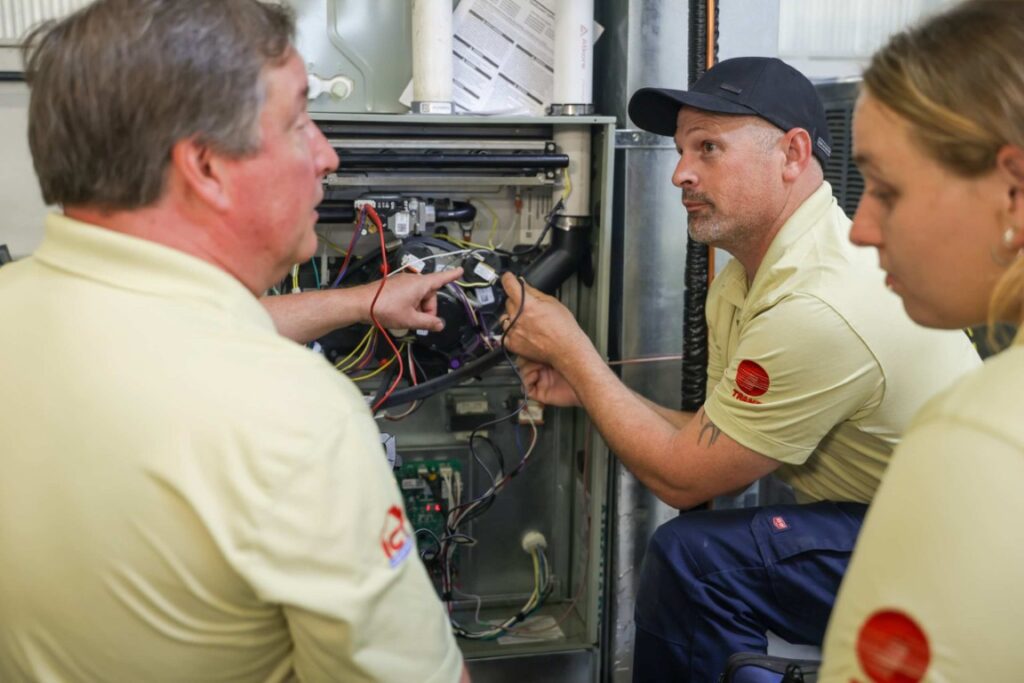
Look, every furnace is a little different. But after decades of service calls across St. Louis, the same parts keep showing up as the culprits. Here’s what tends to wear out, and what a careful technician looks for.
Part | Typical Life | Warning Signs You Might Notice | What a Tech Checks |
Hot surface igniter | 3–7 years | Furnace tries to start, then gives up | Resistance reading; hairline cracks |
Flame sensor | Varies (dirt is the enemy) | Burners light, then shut off after a few seconds | Cleans it; measures the flame signal |
Inducer motor | 10–15 years | Humming, rattling, or a whine at startup | Bearing noise; amp draw vs. rating |
Blower capacitor | 5–10 years | Blower slow to start, or not at all | Tests capacitance against its rating |
Blower motor | 10–20 years | Weak airflow; burning smell | Amp draw; bearings; wheel buildup |
Heat exchanger | 15–20+ years | Soot, odd flame shape, CO alarm | Visual and camera inspection; flame behavior |
Pressure switch and limit switch | 10–15 years | Furnace cycles on and off; shuts down early | Proper open/close function; safety tests |
Notice something? Most of these parts give small hints before they quit. The trouble is that you won’t hear or see most of them from upstairs. A meter will catch them, though.
The Part Most Homeowners Never Think About
The blower capacitor is a small, cheap part. It’s about the size of a soda can, and it helps the blower motor start. When it gets weak, the motor strains on every startup and runs hotter than it should.
Left alone, a $30 capacitor problem can turn into a $600 motor replacement. And it usually happens during a long run in deep cold. A test takes about two minutes, which is why it belongs in every tune-up on an older furnace.
What Real Furnace Maintenance Looks Like (and What a “Quick Look” Misses)
It’s frustrating to pay for a tune-up and then wonder whether anyone did much. Maybe the tech was in and out in 20 minutes. Maybe you got a checklist with every box ticked and nothing explained.
Here’s what matters. On a furnace this age, furnace maintenance should be about measuring, not just looking.
Numbers Beat “Looks Good”
A thorough visit takes readings. That means the gas pressure, the temperature rise across the heat exchanger, the motor amp draw, the flame sensor signal, and how the safety switches respond. Each number gets compared to what the maker says that furnace should do.
Why does this matter? Because a furnace can look fine and still be running out of spec. A temperature rise that’s too high, for example, can mean poor airflow is cooking the heat exchanger. That speeds up cracking, which is the failure you most want to avoid.
The Safety Check You Shouldn’t Skip
Older furnaces raise one concern above the others. A cracked heat exchanger can let carbon monoxide mix into your home’s air. That’s not a scare tactic. It’s the main reason age matters so much here.
A good tech inspects the heat exchanger, watches how the flame behaves when the blower kicks on, and checks how the furnace vents. If anything looks off, you should get a clear explanation and, when possible, a photo. You shouldn’t just be told “it’s cracked, you need a new one.” And no matter how well the furnace is running, you should have working CO detectors near sleeping areas.
The Exception Worth Knowing
Maintenance can’t fix everything. If a heat exchanger is truly cracked, no tune-up will make that furnace safe again. The same goes for a furnace whose parts are no longer made. In those cases, the honest answer is replacement, and you deserve to hear that plainly instead of paying for repairs that only delay it.
Repair It or Replace It? The Honest Math
This is the question that keeps people up at night, even when the furnace is still running. You might feel stuck between two fears: wasting money on an old furnace, or getting talked into a $10,000 system you didn’t need.
Here’s a simple starting point many pros use. Multiply the furnace’s age by the repair cost. If the number is over about $5,000, replacement is worth a serious look. If it’s well under, a repair usually makes sense.
Situation | Furnace Age | Repair Cost | Age × Cost | Usual Smart Move |
Weak capacitor | 12 years | $180 | $2,160 | Repair it |
Failed igniter | 14 years | $300 | $4,200 | Repair, then plan ahead |
Bad inducer motor | 17 years | $650 | $11,050 | Get a replacement quote |
Cracked heat exchanger | 18 years | Often not worth repairing | — | Replace |
But here’s what matters: this rule is a starting point, not a verdict. A 15-year-old furnace that was sized right and serviced every year can easily outlast a 10-year-old one that was too big for the house from day one.
Why an Oversized Furnace Ages Faster
This is the part that surprises people. Many older homes have furnaces that are too big. They heat the house fast, shut off, then start again a few minutes later. That’s called short-cycling.
Every startup is hard on the igniter, the inducer, and the heat exchanger. So an oversized furnace can rack up wear like a car that only drives in stop-and-go traffic. If your furnace runs in short bursts, that’s worth asking about. It affects both how long the furnace lasts and what size the next one should be.
How Indoor Comfort Team Approaches an Aging Furnace
Most HVAC companies make more money when you replace. That’s simply how the business works, and it’s why so many homeowners feel unsure about the advice they get.
Indoor Comfort Team does it differently. Owner Adam Rahmanovich trained in mechanical engineering, and that mindset shapes every visit: diagnose first, measure everything, and explain the “why.” You can read more about Adam and his approach to the trade.
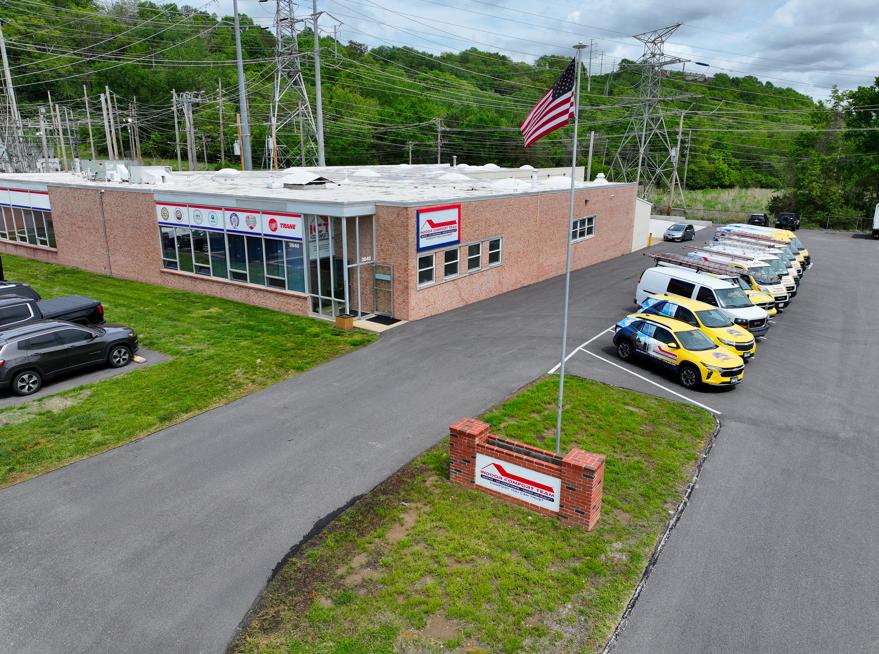
Our technicians aren’t subcontractors. Many have been with us for decades, and they go through our in-house ICT Certification Program before they ever work on your furnace. That experience matters on older equipment, because they’ve seen how these systems wear out, model by model, for years.
And when a $300 heating repair will buy you several more good winters, we’ll tell you so. If the furnace truly is at the end of the road, we’ll show you the proof. Then we’ll run a load calculation so your replacement furnace fits your home rather than just the biggest box on the truck.
Indoor Comfort Team has served St. Louis and the Metro East since 1979, with over 1,000 five-star reviews. That’s not a sales pitch. It’s a track record of being right the first time and honest every time.
How to Stay Ahead of the Cold Snap
You don’t have to wait for the worst night to find out where your furnace stands. A little planning takes most of the stress away.
Book your furnace maintenance in early fall, before the first hard freeze and before schedules fill up. Change your filter every one to three months, and check it more often if you have pets. A clogged filter is one of the most common reasons an older furnace overheats and shuts itself off.
Want the simplest approach? A maintenance plan like our VIP Club Plan puts your furnace on a schedule, keeps your system history on file, and gets you priority service if something does go wrong. For an older system, having a tech who already knows your furnace is a real advantage.
New to us? Check our current specials, including a furnace clean-and-check for first-time customers. And if you’re weighing a replacement, financing options can make the decision easier.
Frequently Asked Questions
How often does an older furnace need maintenance?
Once a year, ideally in early fall. Furnaces over 10 years old benefit most, because worn parts tend to show measurable warning signs weeks before they fail. A fall visit gives you time to fix them before deep cold arrives.
Can furnace maintenance really prevent a breakdown?
It can’t prevent every one, but it catches most of the common ones. Igniters, flame sensors, capacitors, and inducer motors usually test weak before they quit. Replacing a $30 to $300 part in October costs far less, and causes far less stress, than an emergency call at 2 a.m.
Is a 15-year-old furnace worth maintaining, or should I just replace it?
Often it’s worth maintaining. Age alone doesn’t decide it. What matters are the heat exchanger’s condition, how often the furnace has needed repairs, and whether it was sized right for your home. A furnace that tests well can have several good years left.
What does furnace maintenance cost compared to an emergency repair?
A tune-up is usually a small fraction of an after-hours repair. An emergency visit on the coldest night can also mean waiting longer, since every HVAC company is slammed then. Planned maintenance lets you fix problems on your schedule, not the weather’s.
Sleep Through the Cold Snap
Here’s the bottom line. Older furnaces don’t fail out of nowhere. They wear out in a predictable order, and the coldest night is simply when the weakest part gives up. Good furnace maintenance finds that part first by measuring rather than guessing.
You don’t need a new furnace just because yours has hit 10, 12, or even 15 years. You need an honest answer about where it stands.
Don’t wait for the house to go quiet at 2 a.m. Call Indoor Comfort Team at (314) 230-9542 or schedule your furnace maintenance online today. We’ll tell you exactly what we find, including when a repair is all you need.