 Based on 1,000+ Reviews!
The Furnace Always Picks the Worst Possible Night
It’s 5:40 a.m. on a Tuesday in January. The baby’s room is 61 degrees, your partner has a 7:30 meeting, and you’re the one standing in the basement staring at a silent furnace.
Sound familiar?
Here’s the thing. Most furnace breakdowns don’t come out of nowhere. They build slowly, over months, and they show up on the coldest night because that’s when the system works hardest. Regular furnace maintenance catches those problems early, on your schedule instead of the furnace’s.
But you’ve probably got a real worry. Who has time to wait around for a “service window” when both of you work and the kids need to be at daycare by 8? This article covers why a yearly tune-up matters more in a house with little ones, what a good technician actually checks, and how to get it done without burning a precious PTO day.

Why Skipping a Tune-Up Costs More Than Your Time
Look, we get it. When the heat is running, the furnace drops to the bottom of the to-do list, right below “clean out the minivan.”
The problem is that “running” and “running well” aren’t the same thing.
The Hidden Math of a Mid-Winter Breakdown
Think about what a no-heat emergency really costs a dual-income family. One of you stays home. Maybe both of you, if the kids can’t go to daycare in a cold house. You might pay a premium for a weekend or after-hours call. And you’ll likely spend a night with space heaters running in the nursery, which is its own kind of stressful.
Compare that to a planned visit that takes about an hour. You pick the day. You pick the slot. Nobody shivers.
That’s the trade. A small, planned hour versus an unplanned day (or two) at the worst time of year.
Your Warranty Might Be Counting on It
Here’s something a lot of homeowners don’t know until it’s too late. Many furnace manufacturers expect proof of regular professional maintenance to honor parts warranties. If a part fails and there’s no service record, you could be stuck with the bill.
A yearly visit with paperwork you can find later? That’s cheap insurance.
What Happens During Real Furnace Maintenance (Not a “Quick Look”)
Not all tune-ups are equal. Some companies send someone to change your filter, glance at the burners, and hand you a sales pitch. That’s frustrating, and it’s exactly why so many people don’t trust HVAC visits.
A thorough visit should feel more like a check-up at the pediatrician. There’s a checklist, there are measurements, and you get a clear answer at the end.
The Safety Checks That Matter Most With Kids at Home
With young children in the house, safety comes first. Gas furnaces make carbon monoxide as part of normal burning. A healthy system sends it safely outside. A cracked heat exchanger, a blocked flue, or a bad draft can let it leak into your living space.
A good technician will inspect the heat exchanger, test the flue and venting, check gas pressure, and confirm that safety switches shut the system down when they should. They should also check that the flame looks right and the ignition works cleanly.
And please, no matter how new your furnace is, keep working carbon monoxide detectors near the bedrooms. Maintenance lowers the risk. Detectors are your backup.
The Efficiency Checks That Protect Your Budget
Next comes the stuff that affects your gas bill and your comfort. That includes cleaning the burners and flame sensor, checking the blower motor and wheel, measuring temperature rise across the furnace, testing the thermostat, and looking at airflow and the filter.
Small things add up. A dirty flame sensor is a common reason a furnace starts, stops, and starts again. A clogged filter makes far-off bedrooms feel chilly.
The “Why” Behind the Readings
But here’s what matters. Numbers mean nothing if nobody explains them.
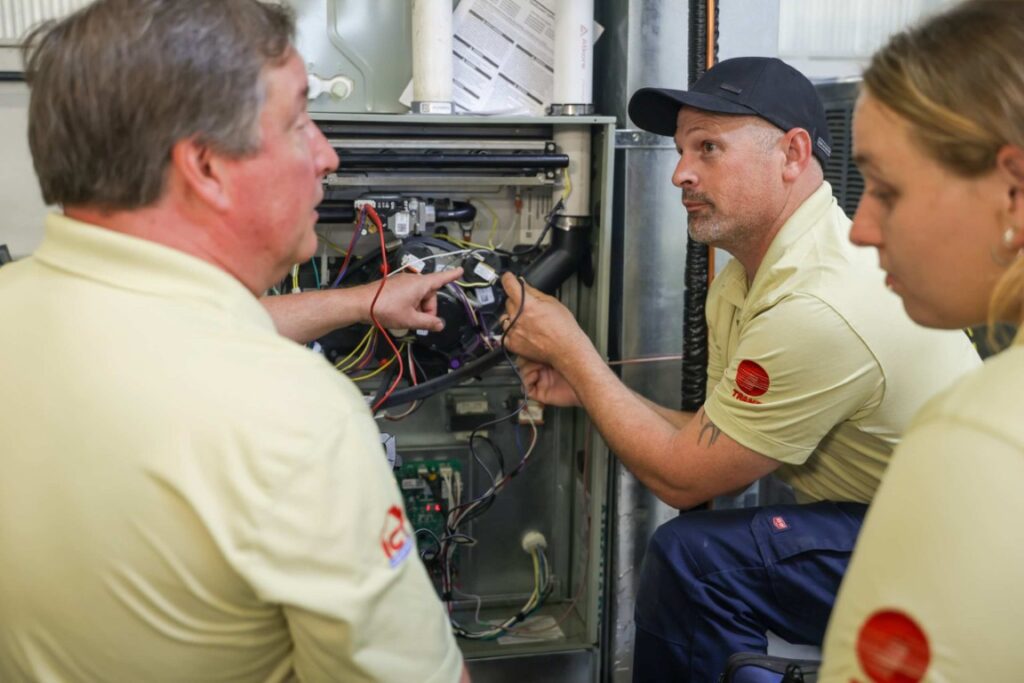
At Indoor Comfort Team, owner Adam Rahmanovich trained in mechanical engineering, and that mindset shows up in how the team works. Technicians don’t just tell you something is “bad.” They show you the reading, tell you what it means, and give you the honest call. Sometimes that call is, “Your furnace is fine. Change the filter more often and you’re set.”
That approach comes from training, too. The company’s in-house ICT Certification Program teaches techs to diagnose first and sell second.
How to Get Furnace Maintenance Done Without Taking a Day Off
Okay. This is the part you actually came for.
You don’t need a four-hour window and a free afternoon. You need a plan.
Grab the First Slot of the Day
The earliest appointment of the day is gold for working parents. There are no earlier jobs to run late, so the tech shows up when they say they will. Indoor Comfort Team books weekday appointments starting at 7 a.m. That means one parent can let the technician in, finish the visit, and still make a mid-morning start at work.
One parent handles daycare drop-off while the other stays home for the hour. Easy.
Use Saturdays Before the Rush Hits
Weekend appointments are another lifesaver. Saturday service means nobody has to ask the boss for anything. The catch? Those slots fill quickly once the first cold snap hits.
So book in September or early October. In St. Louis, the first real cold usually lands somewhere in late October or November. Everyone who skipped their tune-up calls at once, and that’s when wait times stretch out.
Make Your Furnace Easy to Service
You can cut visit time with a little prep. Clear a path to the furnace (yes, that means the pile of outgrown car seats). Know where your thermostat is and how it’s set. Jot down anything weird you’ve noticed, like a new rattle, a burning smell on the first run, or a room that never warms up.
Put It on Autopilot With a Maintenance Plan
Want to know the secret? The busiest families don’t remember to book maintenance. They join a plan that reminds them.
The VIP Club Plan includes two maintenance visits a year, one before heating season and one before cooling season. Members get priority scheduling, so you jump ahead when everyone else is calling. You also never pay overtime charges on repairs, and you get 10% off repair work. If the furnace fails at 9 p.m. on a Sunday, that “no overtime” line suddenly feels like a really big deal.
Best part for a tight budget: there’s no contract, and you can pay monthly, quarterly, twice a year, or once a year.
Comparing Your Options at a Glance
Not sure which route fits your family? Here’s a side-by-side look.
Option | Time You Spend | Safety Checks | Scheduling Priority | Best For |
Skip maintenance | None now, possibly 1–2 days later | None | None, you wait in line during a cold snap | Nobody, honestly |
DIY filter changes only | 5 minutes every 1–3 months | None (can’t test heat exchanger or CO safely) | None | Everyone, as a supplement |
One-time furnace tune-up | About 1 hour, once a year | Full inspection | Standard | Families trying a company for the first time |
VIP Club Plan | About 1 hour, twice a year | Full inspection, heating and cooling | Priority scheduling, no overtime on repairs | Busy families who want it handled |
If you’re new to the company, the Furnace Clean & Check special is a low-risk way to see how the team works before you commit to anything.
What You Can Handle Between Visits
Professional furnace maintenance covers the hard stuff. Still, you’ve got a few easy jobs that keep things running smoothly between visits.
Change your filter on schedule. Homes with pets, allergies, or ongoing remodeling usually need it more often. Set a phone reminder for the first Saturday of every other month and it’ll stop being a thing you forget.
Keep supply and return vents clear of toy bins, couches, and drying laundry. Test your carbon monoxide and smoke detectors monthly. And listen. A new squeal, a boom when the burners light, or a furnace that runs nonstop are all signs worth a call.
When DIY Isn’t Enough
This doesn’t work if you smell gas. If you do, get everyone out of the house and call your gas company from outside. Don’t flip switches or try to “check” anything.
The same goes if your CO detector goes off, or if your furnace keeps tripping a breaker. Those are calls for professional heating repair, not YouTube.
“Do I Need a New Furnace?” (Maybe Not)
You might feel overwhelmed when a tech starts talking about replacement. It’s a big number, and it always seems to come up when you’re already stressed.
Here’s the honest version. Age alone doesn’t mean you need a new furnace. A well-maintained 15-year-old unit can have life left in it, while a neglected 8-year-old one might not. Repair cost, safety, efficiency, and how comfortable your home actually feels all play a part.
That’s why diagnosis has to come first. When Indoor Comfort Team recommends furnace replacement, it’s because the numbers support it, and the new system gets sized to your home with a proper load calculation. An oversized furnace can short-cycle, wear out sooner, and leave rooms uneven. A right-sized one runs quieter and lasts longer.
And when a $300 repair buys you a few more good winters? You’ll hear that too.
Frequently Asked Questions
How often should furnace maintenance be done?
Once a year is the standard for most gas furnaces, ideally in early fall before heavy use starts. If you have a heat pump, it runs in both seasons, so twice a year makes more sense. Older systems and homes with pets or allergies also benefit from closer attention.
How long does a furnace tune-up take?
Most take about an hour, though older or very dirty systems can take a bit longer. Booking the first appointment of the day gives you the best shot at staying on time, which matters a lot when you’re juggling work and school drop-off.
Does someone have to be home during furnace maintenance?
Usually, yes. An adult needs to let the technician in and should be around in case a safety issue comes up. The good news is that you can work from another room while it happens. Early weekday and Saturday slots make this much easier for working parents.
Is furnace maintenance worth it if my furnace is new?
Yes. New furnaces still collect dust, still need safety testing, and many manufacturers expect a maintenance record to back warranty claims. Early visits also give your tech a baseline of readings. That makes it easier to spot small changes before they turn into big repairs.
Warm Kids, Calm Mornings, and One Less Thing to Worry About
Let’s bring it home. Furnace maintenance protects your family’s safety, keeps your heating bill in check, and saves you from that dreaded 5 a.m. cold-house scramble. A thorough visit checks for carbon monoxide risks, cleans the parts that cause most breakdowns, and gives you honest answers, not a sales pitch.
And no, you don’t need to sacrifice a vacation day. Book the first slot of the morning or a Saturday, schedule before the late-fall rush, or let a maintenance plan handle the reminders for you.
The team at Indoor Comfort Team has been keeping St. Louis homes warm since 1979, with technicians who stay with the company for years and get to know your house. Ready to cross this one off your list? Schedule your furnace tune-up today or call (314) 230-9542. Your future self, the one sleeping through a January night, will thank you.