 Based on 1,000+ Reviews!
Why Does Everyone Start Sneezing the Day the Heat Kicks On?
It’s the first cold night of the fall. You flip the thermostat to “heat.” Within an hour, there’s a burning-dust smell, your kid is coughing, and your eyes itch.
Sound familiar?
If someone in your home has allergies, asthma, or another breathing condition, that first week of heating season can feel like a setback. It’s frustrating when the system that’s supposed to keep your family comfortable seems to make them feel worse.
Here’s the thing: your furnace doesn’t create dust. It moves air, and in most homes it moves the whole house’s air several times an hour. If dust, pet dander, and pollen are hiding inside the system, the furnace spreads them into every room.
Good furnace maintenance can change that. In this guide, you’ll learn where allergens hide in a heating system, what an allergy-focused tune-up should cover, which filter upgrades help (and which ones backfire), and when to schedule service so the heat feels like a relief, not a trigger.

Where Dust Really Hides in Your Heating System
Most people think of the filter as the only place dust collects. It’s actually one of several.
The Blower Wheel Nobody Looks At
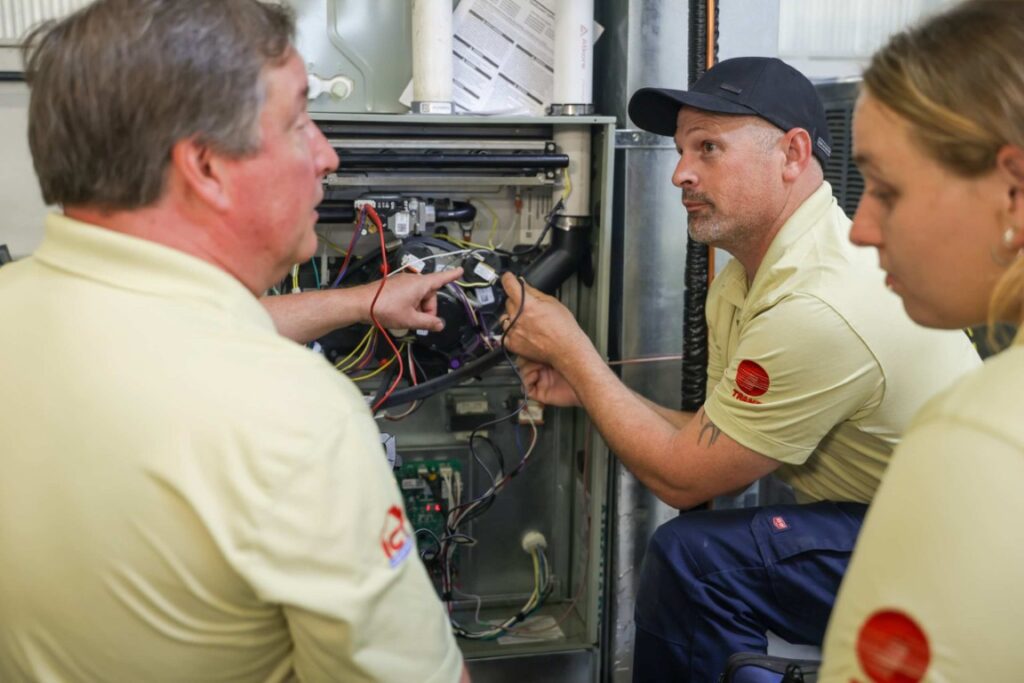
The blower is the fan that pushes warm air through your ducts. Over time, its curved blades collect a fuzzy layer of dust and dander. Each season, a little of that layer breaks loose and goes straight into your vents.
A dirty blower also moves less air. That means the furnace runs longer to heat your home, and more air passes over all that buildup.
Leaky Return Ducts in the Basement
This is the problem we see most often, and few homeowners have heard of it.
Return ducts pull air back to the furnace. When they have gaps, especially in an unfinished basement, crawlspace, or attic, they suck in whatever is nearby. That can be basement dust, insulation fibers, or musty air. And if the gap is on the furnace side of the filter, that air goes straight into the system without being filtered.
So you could buy the best filter on the market, and dirty air would still get past it.
The Gap Around Your Filter
Look at your filter slot. Is there a cover? Does the filter fit snugly, or does it rattle around?
A filter that’s even half an inch too small lets air slip around the edges. Air always takes the easy path. Your filter might look clean because a lot of the dust went around it instead of into it.
What Allergy-Smart Furnace Maintenance Should Include
A quick “clean and check” keeps a furnace running. An allergy-focused visit also looks at the air your family breathes. Here’s how the two compare.
Maintenance Task | Basic Tune-Up | Allergy-Smart Tune-Up | Why It Matters for Allergies and Asthma |
Replace or inspect filter | Yes | Yes, plus a fit check for bypass gaps | Stops air from going around the filter |
Inspect blower | Visual check | Clean the blower wheel if buildup is found | Stops buildup from shedding into your vents |
Check burners and flame | Yes | Yes | A clean burn means fewer fumes and less soot |
Inspect heat exchanger | Yes | Yes, with a carbon monoxide test | Protects sensitive lungs from combustion gases |
Measure static pressure | Rarely | Yes | Shows whether your system can handle a better filter |
Check return ducts near the furnace | Rarely | Yes | Finds leaks that pull in unfiltered basement air |
Check temperature rise and airflow | Sometimes | Yes | Shows whether the system is sized and running right |
Clean the condensate drain (high-efficiency units) | Yes | Yes | Prevents standing water and mold growth |
Look, not every home needs every item on the right side every single year. But if someone in your home uses an inhaler, those extra checks are where the real difference shows up.
Why Static Pressure Is the Test You Should Ask About
Static pressure tells a technician how hard your furnace has to work to push air through the filter and ducts. It’s like taking your system’s blood pressure.
This matters because many allergy-conscious families upgrade to a thicker, higher-rated filter, which is a smart move. But if the ductwork is already tight, a denser filter can choke the airflow. The furnace then runs hot, short-cycles, or wears out early.
A technician who measures first can tell you whether your system can handle the upgrade, or whether a wider filter cabinet is the better answer. That’s the difference between guessing and knowing.

The Carbon Monoxide Check You Can’t Skip
For families with asthma, the air quality concern isn’t only dust. A cracked heat exchanger can let combustion gases into the airstream. Even small amounts can irritate sensitive airways long before a carbon monoxide alarm goes off.
That’s why every tune-up should include a careful look at the heat exchanger and a combustion test. It takes a few extra minutes, and it’s worth it.
Choosing the Right Filter Without Overdoing It
Filters are rated by MERV, which stands for Minimum Efficiency Reporting Value. Higher numbers catch smaller particles. Here’s a simple breakdown for homes with allergies.
MERV Rating | What It Catches | Good Fit For | Watch Out For |
1–4 | Large dust and lint | Protecting the equipment only | Does little for allergies |
5–8 | Pollen, dust mites, mold spores | Most homes as a baseline | Still lets fine dander through |
9–12 | Adds finer dust and some pet dander | Homes with pets or mild allergies | Check airflow first if your ducts are small |
13 | Much finer particles, including some smoke and bacteria | Asthma or serious allergies | Often needs a 4–5 inch media cabinet to avoid choking airflow |
The exception is a home where the furnace is already struggling. In that case, a 1-inch MERV 13 filter can do more harm than good. A deeper media filter usually holds more dust with less airflow resistance, and it often lasts several months between changes.
Here’s what matters most: the best filter is the one that fits tight, matches your system, and actually gets changed on time.
Small Habits That Make a Big Difference
Maintenance isn’t only what happens during the service visit. A few habits between visits help the furnace protect your air.
Change your filter on schedule. For a 1-inch filter in an allergy household, that’s often every 30 to 60 days during heating season. Pets, smokers, or home renovation projects shorten that window.
Consider running the fan on “on” during bad allergy days instead of “auto.” When the fan only runs while the heat is on, your filter only cleans air part of the time. Running the fan more often sends more of the house’s air through the filter. It uses some extra electricity, so save it for the days when symptoms are worst.
Watch your humidity, too. Furnace heat dries out indoor air, and very dry air can irritate noses, throats, and airways. Too much moisture causes its own problems, since dust mites and mold thrive in damp air. A middle range, usually around 30 to 45 percent in winter, is a good target for most homes.
Finally, vacuum your supply and return grilles every few weeks. It’s a two-minute job that keeps visible dust from building up right where the air enters your rooms.
Is Your System Too Big for Your Home?
This one surprises people.
An oversized furnace heats the house fast, then shuts off. Then it turns back on. Then off again. Technicians call this short-cycling, and it’s bad news for allergy sufferers.
Why? Because each short run moves less total air through the filter. The house warms up, but the air doesn’t get cleaned as much. Short-cycling also causes uneven temperatures and more wear on parts.
If your furnace seems to turn on and off constantly, a load calculation can show whether the system matches your home. Sometimes the fix is a simple adjustment. Other times, it explains years of stuffy, dusty rooms. Either way, you deserve a clear answer before anyone talks about new equipment.
When to Schedule Furnace Maintenance for an Allergy Household
Timing matters more than most people realize.
In the St. Louis area, ragweed pollen often peaks in late summer and early fall. That pollen settles into your home and onto your filter right before heating season starts. If your furnace gets serviced in September or early October, the technician can swap out that pollen-loaded filter and clean the blower before the first big cold snap.
Wait until November, and you’ve already spent a few weeks circulating it.
Scheduling early also helps you avoid the rush. When the first freezing night hits, HVAC companies get flooded with calls. If you get on the schedule early, you won’t be stuck waiting for help when the house is cold.
Why the Diagnosis Matters as Much as the Cleaning
Here’s an honest truth about the HVAC industry. Many homeowners don’t distrust the furnace. They distrust the recommendation. The person checking your system is often the same person paid to sell you the fix.
At Indoor Comfort Team, we think the right answer has to come before any sale. Owner Adam Rahmanovich trained in mechanical engineering and holds BPI building-science credentials. That shapes how our technicians work. They measure airflow, test static pressure, and check combustion. Then they explain what the numbers mean for your family’s breathing and comfort.
Sometimes that means a better filter and a cleaned blower. Sometimes it means sealing a leaky return duct. And sometimes it means telling you that a modest repair beats a $10,000 replacement. Indoor Comfort Team would rather be right than sell you something you don’t need.
Our technicians are NATE-certified, background-checked, and trained through our in-house ICT Certification Program. We don’t use subcontractors. Many of our techs have been with us for years, so the person who comes back next fall often already knows your house.
Frequently Asked Questions
How often should I get furnace maintenance if someone in my home has asthma?
Once a year, ideally in early fall, is the standard. For homes with asthma or serious allergies, ask for a visit that includes a blower inspection, filter fit check, and combustion test, and change your filter more often between visits.
Can furnace maintenance actually reduce allergy symptoms?
It can cut down on the allergens your system spreads around. A cleaned blower, a properly fitted filter, and sealed return ducts all reduce the dust and dander that reaches your rooms. It won’t cure allergies, but many families notice less dust and fewer flare-ups.
Is a MERV 13 filter safe for my furnace?
It depends on your ductwork. Some systems handle it fine. Others lose airflow and run hot. A static pressure test during furnace maintenance tells you for sure, and a deeper media cabinet often solves the problem.
What’s that burning smell when I first turn on the heat?
Usually it’s dust burning off the heat exchanger and burners after months of sitting idle. It should fade within a day. If it lingers, smells like chemicals, or comes with headaches, shut the system off and call a technician.
Clear Air Starts Before the First Cold Night
You don’t have to dread heating season. Dust and allergens build up in predictable places: the blower, the return ducts, and the gaps around your filter. Allergy-smart furnace maintenance targets each of them.
The key takeaways? Schedule service early, before the pollen-loaded air starts moving through your home. Ask about static pressure before upgrading your filter. Insist on a carbon monoxide check. And work with a team that explains the “why” behind every recommendation.
Indoor Comfort Team has served St. Louis and the Metro East since 1979. If you want the same care every year, our VIP Club Plan keeps your system history on file and gets you priority scheduling. Have questions about cleaner indoor air? Explore our UV air purification options, check our current specials, or schedule your furnace tune-up today. Your lungs will thank you.