
 Based on 1,000+ Reviews!
Your Phone Lights Up at 2 A.M. Again. Now What?
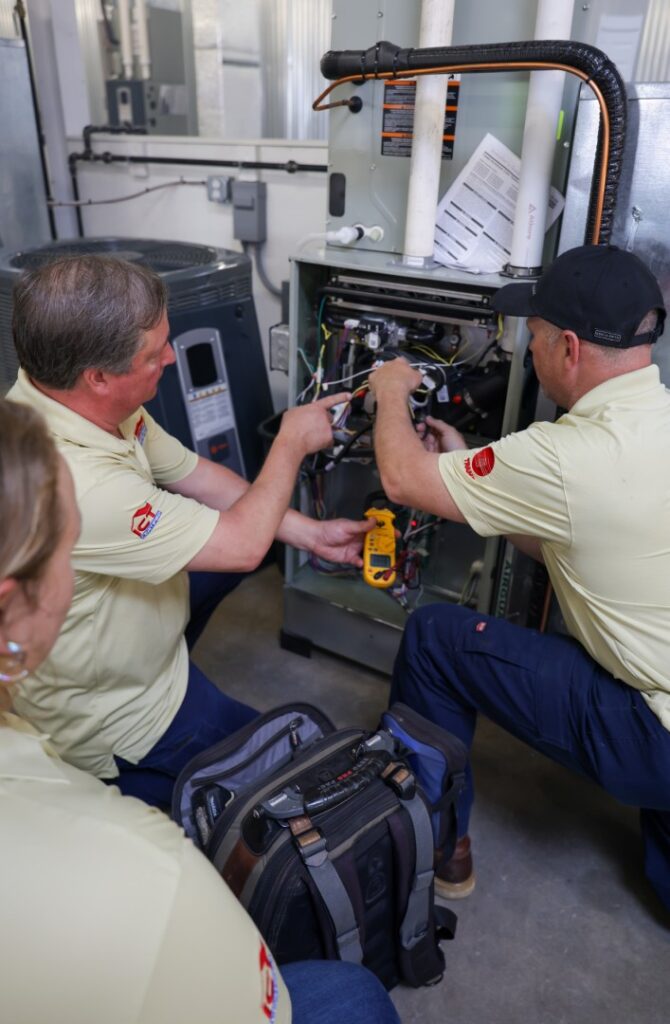 It’s 2:07 a.m. The phone buzzes. Your tenant says the house is freezing and the furnace is dead.
You’re awake, you’re frustrated, and you’re already doing the math. Who do you call? What will it cost? Is this a quick fix or a sign the whole system is dying?
If you own a few rental units, you know this feeling well. You don’t have a maintenance team or a property manager. You have a phone and a tenant who needs heat. Sound familiar?
Here’s the good news. Most no-heat emergencies are predictable, and many are preventable. This guide walks you through what usually breaks, what a tenant can safely check, and how to tell a repair from a replacement. You’ll also see how to set up a system so the 2 a.m. calls get rarer.
Why Furnaces Quit at the Worst Possible Time
Furnaces don’t fail on mild October afternoons. They fail on the coldest night of the year.
That’s not bad luck. A furnace works hardest when temperatures drop, so a weak part finally gives out under the load. A worn igniter, a dirty sensor or a clogged filter might limp along for weeks. Then a deep freeze arrives and the system trips off.
It’s stressful when the tenant is cold and you can’t fix it yourself. But knowing this pattern helps. If you can catch the weak spots in fall, you avoid most of the winter panic.
The Usual Suspects Behind a No-Heat Call
Most furnace repair calls trace back to a short list of causes. The table below shows what a tenant might report, what’s often behind it, and what to do about it.
What the tenant says | Common cause | Safe tenant check | Call a pro? |
“Nothing happens at all” | Tripped breaker, dead thermostat batteries, or a door switch that isn’t pressed in | Check thermostat batteries and the breaker panel | Yes, if it still won’t start |
“It blows cold air” | Dirty flame sensor, failed igniter, or thermostat set to “fan only” | Make sure the thermostat is on “heat” and “auto” | Yes |
“It turns on, then shuts off fast” | Clogged filter causing overheating, or a sensor problem | Look at the filter and replace it if it’s packed with dust | Yes, if the filter swap doesn’t help |
“Weak heat, some rooms cold” | Dirty filter, blocked vents, or a failing blower | Open all vents and clear furniture from them | Yes |
“Weird banging or squealing” | Worn blower parts or a delayed ignition | Nothing safe to do. Turn the system off. | Yes, soon |
“I smell gas” | Possible gas leak | Leave the home and call the gas utility from outside | Emergency |
Notice the last row. A gas smell is never a “wait until morning” problem. Tell every tenant in writing that they should leave the unit and call the gas company first.
The Five-Minute Tenant Checklist That Saves Landlords Real Money
Here’s the thing. A surprising number of no-heat calls end with a dead thermostat battery or a closed furnace panel. Those are the “I feel silly” calls, and no one has to pay a service fee for them if the tenant checks first.
Give your tenants a simple card or text with a few safe steps. Ask them to confirm the thermostat is set to heat and a few degrees above the room temperature. Have them swap the thermostat batteries and check that the breaker hasn’t tripped. Then ask them to look at the filter and replace it if it’s clogged.
That’s it. They shouldn’t open the furnace cabinet, touch wiring or relight anything. Safe and simple is the goal.

When Tenants Should Stop and Call You
This doesn’t work if the tenant ignores a safety warning. If they hear loud bangs, see scorch marks or smell gas or burning, it’s time to shut the system off and call. Don’t let anyone try to “just push the reset button” three or four times. Repeated resets can make a small problem worse.
What to Do When the Heat Is Out at 2 A.M.
You’re awake now, so let’s make a plan. First, ask the tenant a few quick questions. Is the thermostat on? Does the furnace make any noise? Is there any odd smell? Those answers help a technician know what to expect.
Next, call a company that offers after-hours help. Indoor Comfort Team offers after-hours emergency service through its contact page, so you aren’t stuck cold-calling strangers at 2 a.m. Having that number saved in your phone before winter is half the battle.
Then keep your tenant in the loop. A short text like “A technician is on the way, and here’s the arrival window” calms people down fast. Cold tenants get anxious when they hear nothing. Silence is worse than a delay.
A Quick Word on Space Heaters
You might feel tempted to tell your tenant to grab a space heater until morning. That’s a judgment call, and it carries fire and electrical risks, especially in older units with overloaded circuits. If you do suggest one, keep it short-term, and remind the tenant to plug it directly into the wall and never leave it unattended. Rules about tenant heat vary by city and state, so check your lease and local requirements. This article isn’t legal advice.
Repair or Replace? How to Make the Call Without Getting Played
This is the question that keeps landlords up at night, and it’s fair to worry. When the same person who diagnoses the problem also profits from selling a new system, it’s hard to know whom to trust. Frustrating, right?
Here’s a simple way to think about it. A repair usually makes sense when the furnace is relatively young, the problem is a single worn part and the system has been fairly reliable. Replacement starts to make sense when repairs pile up, heat is uneven, energy bills keep climbing or the system is well past its expected lifespan.
The exception is when a cheap repair is hiding a bigger problem. A cracked heat exchanger, for example, is a safety issue that doesn’t pay to patch.
Situation | Leans toward repair | Leans toward replacement |
Age of furnace | Under about 10 to 12 years | Roughly 15 years or older |
Type of problem | One failed part, such as a sensor or igniter | Repeated failures or a major component |
Repair history | First or second call in several years | Third call in one season |
Comfort | Heat is even throughout the unit | Cold spots, short cycling or noisy operation |
Safety | No safety concerns | Cracked heat exchanger or carbon monoxide concerns |
Age ranges are general rules of thumb, not guarantees. A well-maintained furnace can outlast a neglected one by years.
Why Sizing Matters More Than Most Landlords Realize
Here’s something many people miss. A furnace that’s too big for a small rental can short-cycle, which means it blasts on and off in short bursts instead of running smoothly. That wears out parts faster and can leave rooms uncomfortable.
That’s why a proper load calculation matters before any replacement. Indoor Comfort Team is led by an engineering-trained owner, Adam Rahmanovich, and the company’s approach is to measure the home and size the system to it. You can read more about his background on the Meet the Owner page. For a landlord, a right-sized system means fewer callbacks and happier tenants.
How to Spot an Honest Furnace Repair Company
You want a pro who tells you the truth, even when the truth is “this is a small fix.” Here’s how to find one.
Ask them to explain the problem in plain language. A good technician can tell you what failed, why it failed and what happens if you wait. If you get vague answers or pressure, that’s a red flag.
Ask whether they’ll give you a straight repair-or-replace recommendation, including when repair is the smarter move. Ask about pricing before work starts. And look at who actually shows up. Some companies use subcontractors, which can mean a stranger at your property. Indoor Comfort Team says it uses no subcontractors, and its technicians are background-checked and NATE-certified. The company also trains people in-house through its ICT Certification Program.
Longevity counts too. The company has served St. Louis residents since 1979, which means it has seen decades of cold snaps and old furnaces. Want a sense of how customers feel? Browse the reviews and testimonials to see what people say about honesty and follow-through. You can also see why customers choose Indoor.
Build a Plan So the 2 A.M. Calls Stop
Reacting to emergencies is exhausting. Planning ahead is calmer, cheaper and far less stressful.
Get Each Furnace Checked Before the Cold Hits
A fall tune-up is the single best move for any landlord. A technician cleans the key parts, tests safety controls and spots worn components before they fail. That’s how you turn a surprise breakdown into a scheduled, daytime visit. You can see the full range of heating services before you book.
If you have several units, the VIP Club Plan is worth a look. Maintenance plans can help keep your properties on a regular schedule instead of leaving it to memory. It’s one less thing to juggle.
Keep a Simple File on Every Unit
You don’t need fancy software. Just jot down the furnace age, filter size, last service date and any repairs. When a tenant calls at 2 a.m., you can tell the technician the details in thirty seconds. That saves time on the phone and often saves money on the visit.
Set Filter Rules in the Lease
Dirty filters cause a lot of avoidable trouble. Spell out who changes the filter, how often and what size to use. Some landlords drop off a few filters each season. It costs very little and prevents plenty of no-heat calls.
When It’s Time to Replace Instead
Sometimes the honest answer is that the furnace has given you all it has. If repairs are stacking up, you’ll likely save money and sleep by replacing it on your schedule instead of in a panic.
Planning a replacement in the off-season gives you room to compare options and avoid emergency pricing pressure. You can learn about furnace replacement and heating installation before you need it. Many landlords also look at financing options so one big bill doesn’t wreck the budget. It’s also worth checking the current discounts and coupons.
And if you’d like a second opinion on whether your current furnace still has life in it, that’s a smart move. A good company will tell you when repair is enough. You can meet the team to see who would be handling your rentals.
Frequently Asked Questions
How fast should a landlord respond to a no-heat call?
Fast, especially in winter. Acknowledge the call right away, send a technician as soon as you can and keep the tenant updated. Legal response times differ by location, so check your local rules and lease terms.
Who pays for furnace repair, the landlord or the tenant?
In most rentals, the landlord is responsible for keeping the heating system working, unless the damage came from tenant misuse. Your lease and local law decide the details, so confirm them for each property.
How often should a rental furnace be serviced?
Once a year, ideally in the fall before heating season. Regular service catches small problems early and helps reduce emergency breakdowns. Want more answers? Browse the FAQ page or the blog.
Is it worth repairing an older furnace?
It depends on the problem and the system’s overall condition. A single inexpensive part on a reliable furnace is usually worth fixing. Repeated failures on an aging system often point toward replacement.
Fewer Midnight Calls, More Peace of Mind
No-heat calls are stressful, but they follow patterns you can plan for. Give tenants a safe checklist, schedule fall maintenance, keep records and know your repair-or-replace signals.
Most of all, find a furnace repair partner you trust before you need one. Indoor Comfort Team is built around solving home comfort problems the right way the first time, and it’s honest about when a repair is all you need.
Don’t wait for the next freezing night. Request service today, or check the service area to confirm they cover your rentals. Your tenants will thank you.